About the Project
AWIC: Breaking Ground was developed as an industry client project in partnership with Awesome Women In Construction (AWIC) - an organisation that promotes gender diversity in the construction sector.
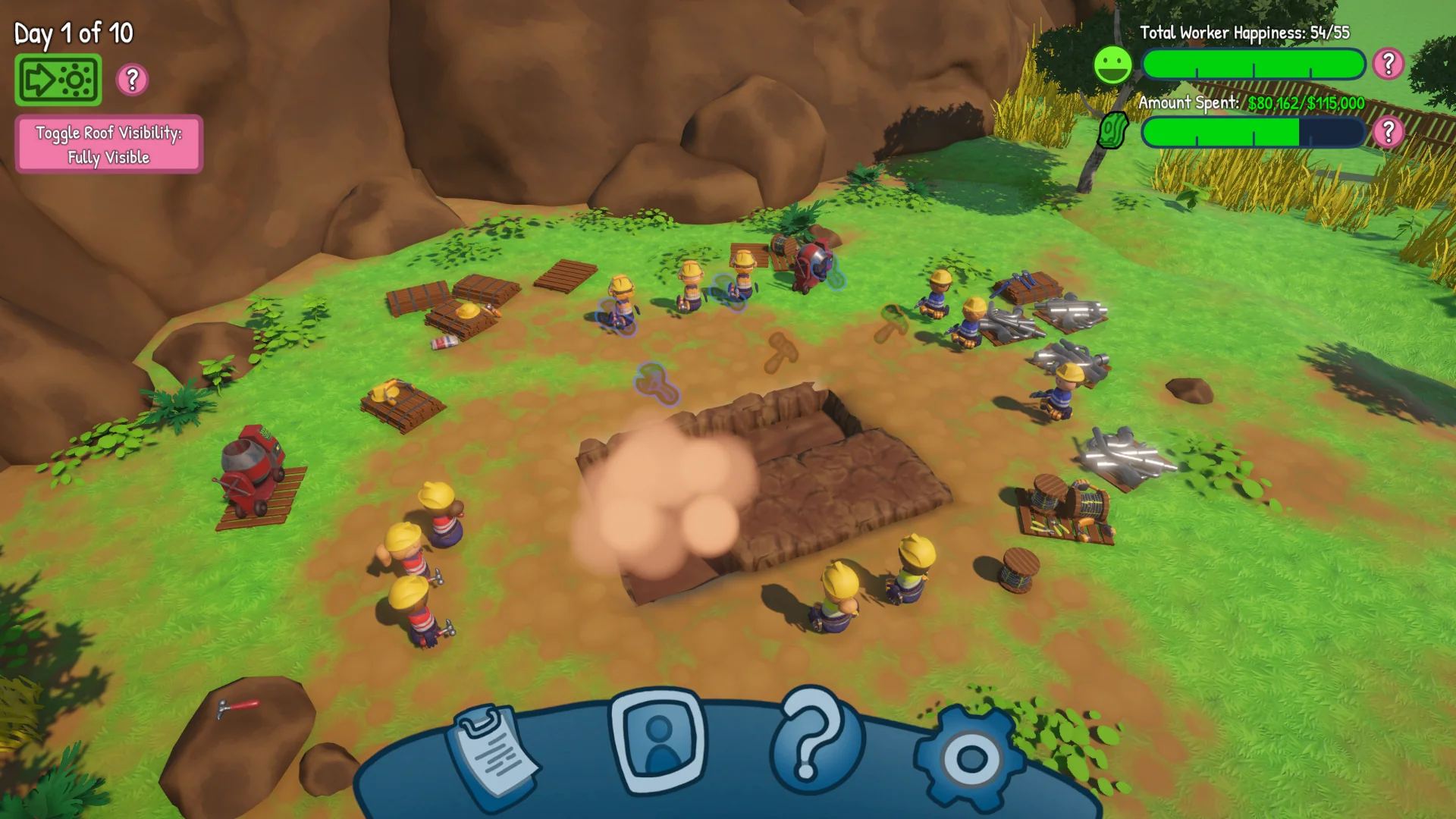
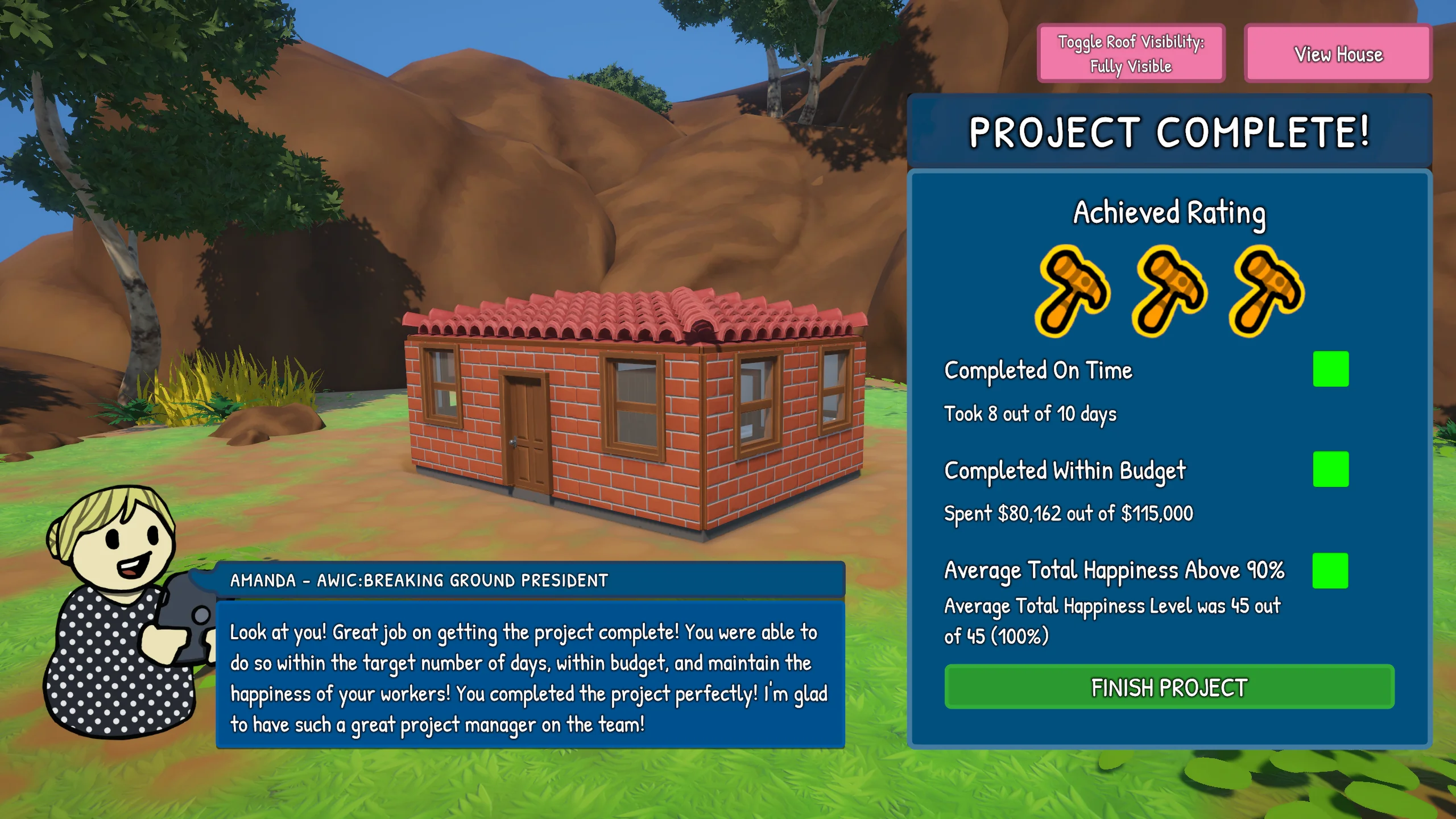
Players manage a team of construction workers, making strategic turn-based decisions to complete home building projects on time and within budget. The game is designed to give players a taste of what a career in construction management looks like, with an emphasis on the role women play in the industry.
Research revealed the construction industry's lack of female representation and educational resources. The game addresses this by showcasing women in diverse roles - from tradespeople to leadership - encouraging inclusivity and career exploration. As lead designer, I shaped the core game loop and UI experience. My programming contributions covered both gameplay systems and the user interface.
My Process
The Project Brief

AWIC: Breaking Ground was developed during IGB200 at QUT. Our industry partner Awesome Women In Construction (AWIC) wanted a game that would encourage young women to consider pursuing careers in construction. Our team of four - one artist, one programmer, and two designers including myself - took on the brief. I started by researching the problem space to understand why young women found the construction industry and unattractive career prospect and what a game could do to address that.
Early Game Concept Ideation & Paper Prototyping
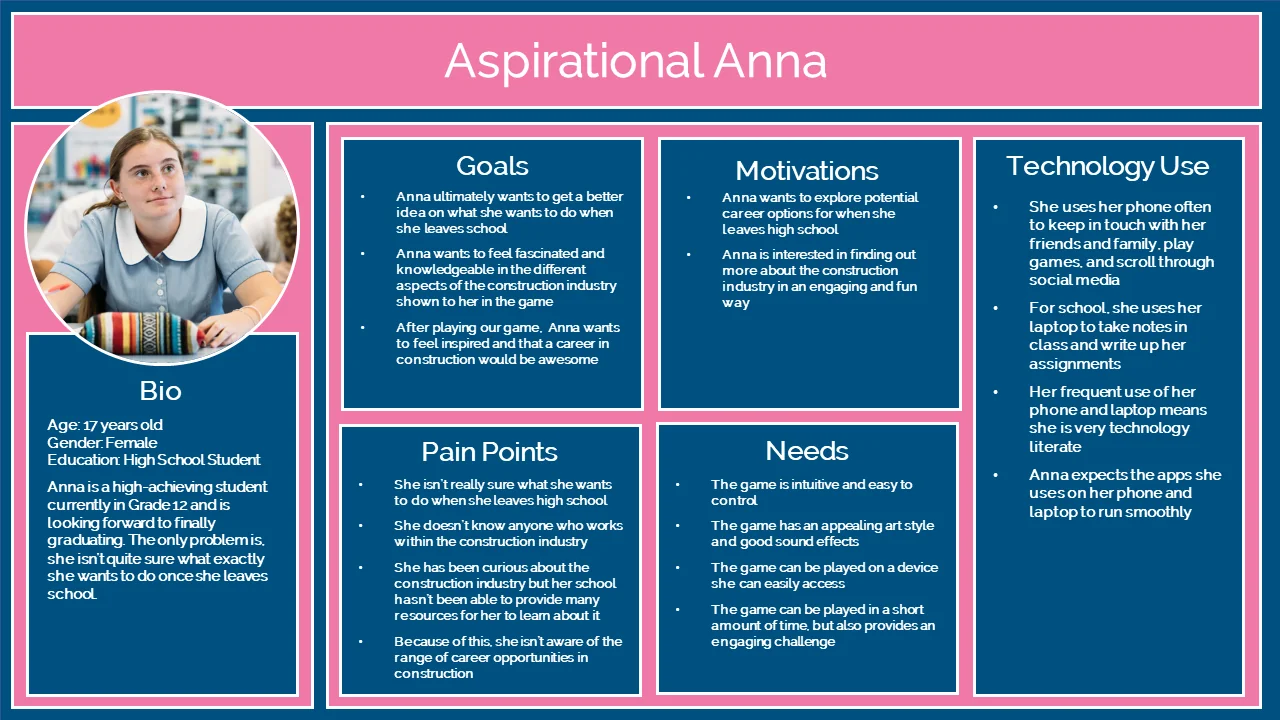
Research pointed to a lack of female representation and accessible educational resources as the primary barriers. To tackle this, I proposed building a "construction version of Overcooked" - a game where players juggle workers and tasks to complete real home-building projects. To validate the concept quickly, I drew up a paper prototype, laminated it, and ran playtests using whiteboard markers so we could iterate without reprinting.
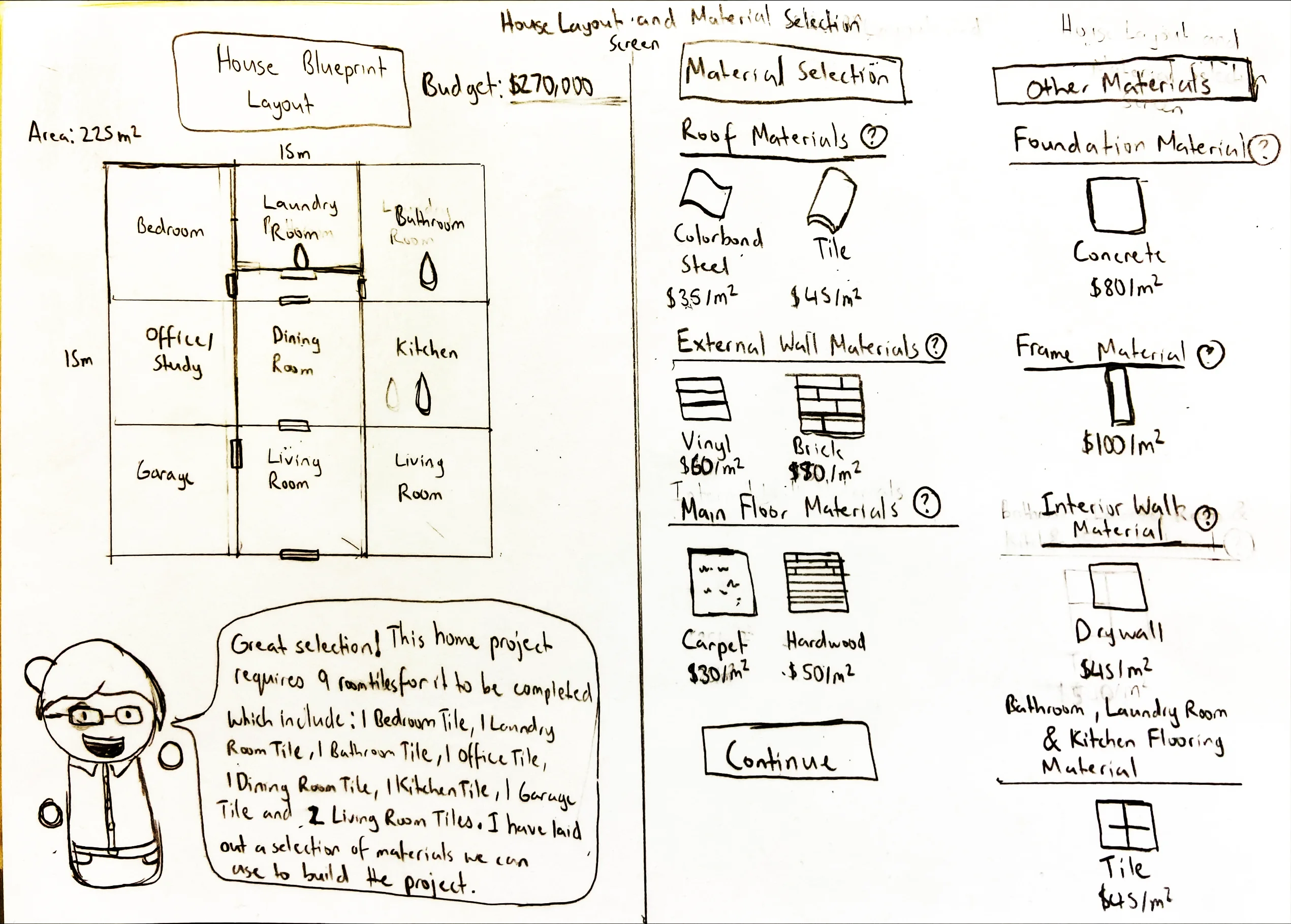
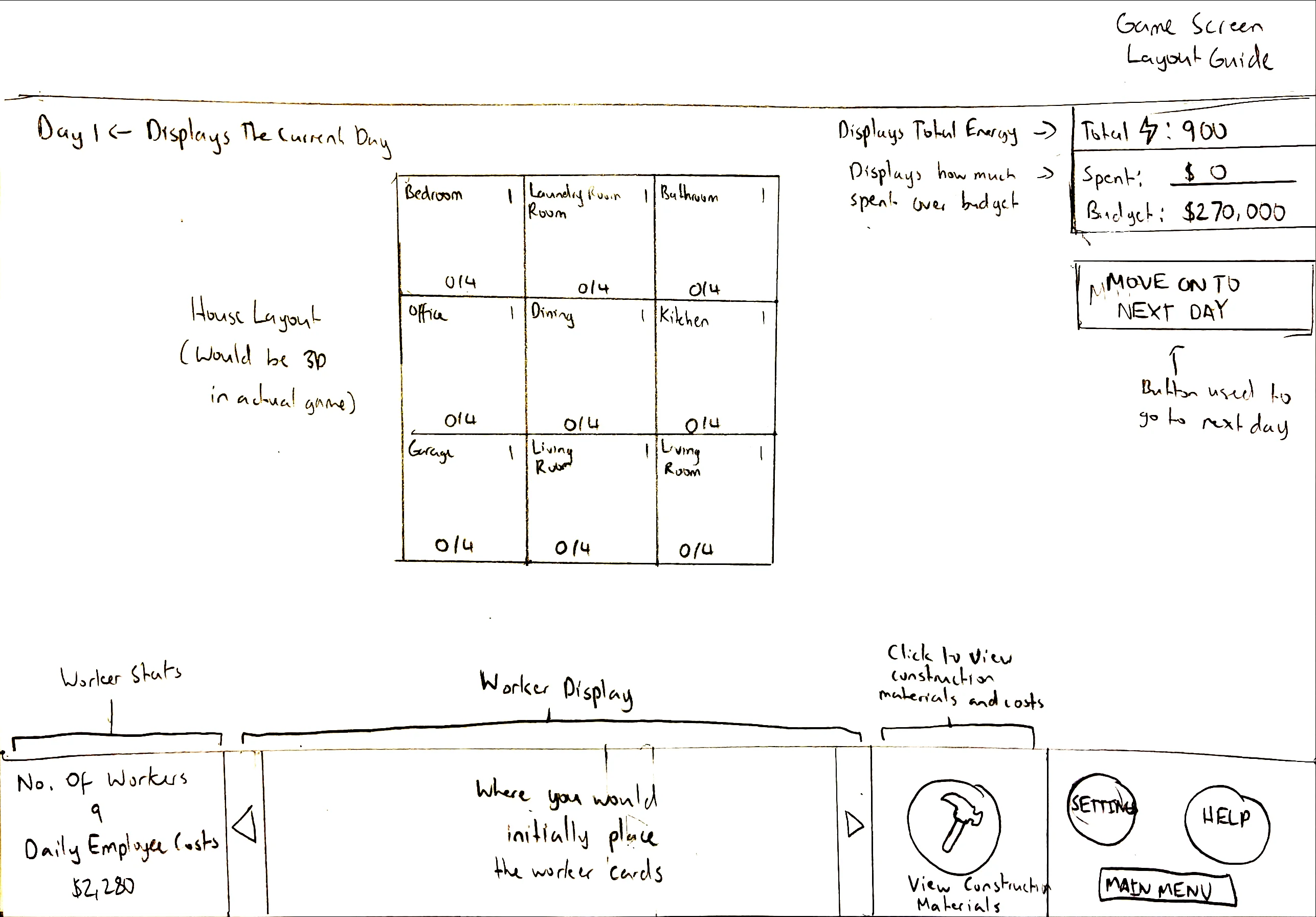
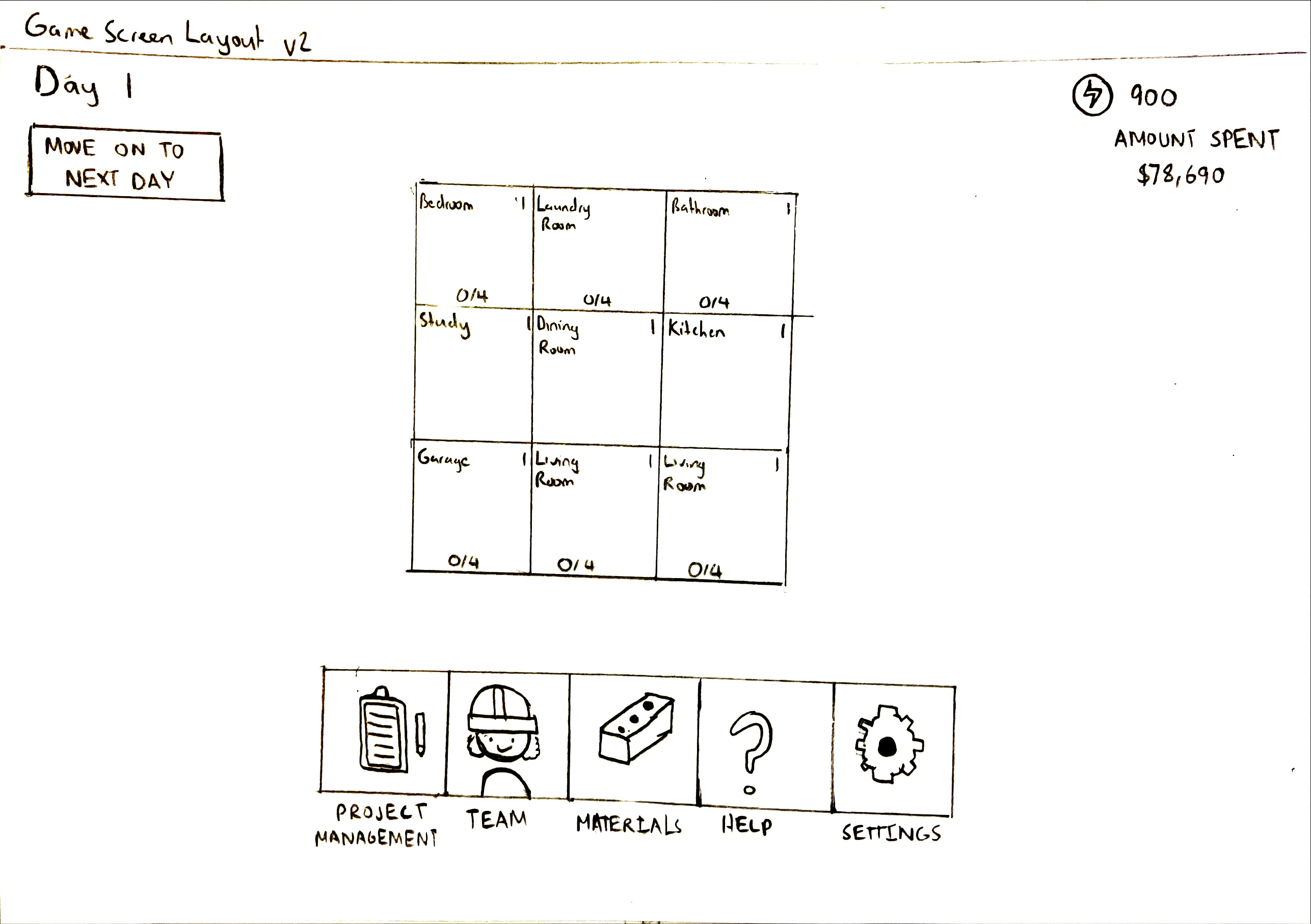
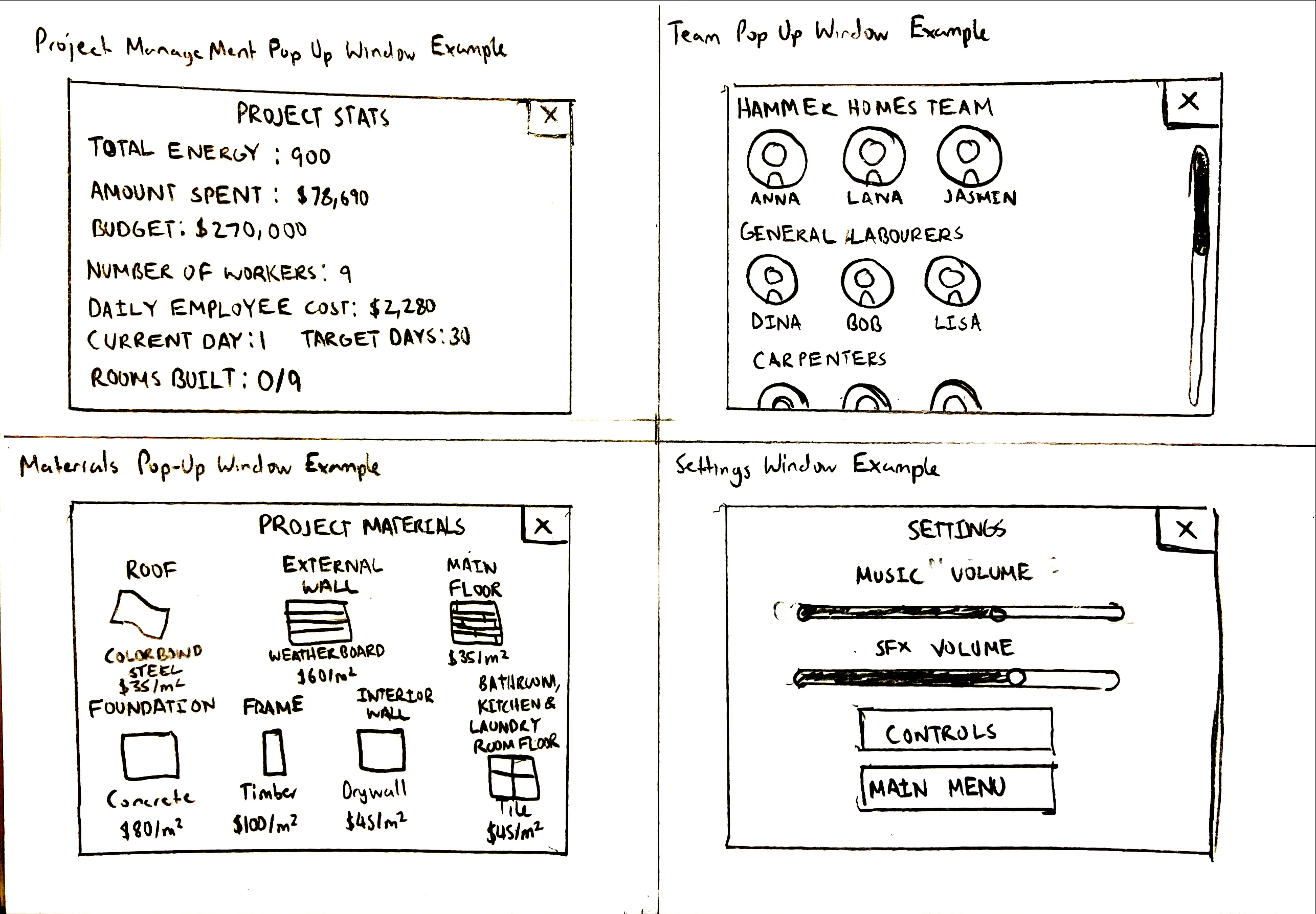
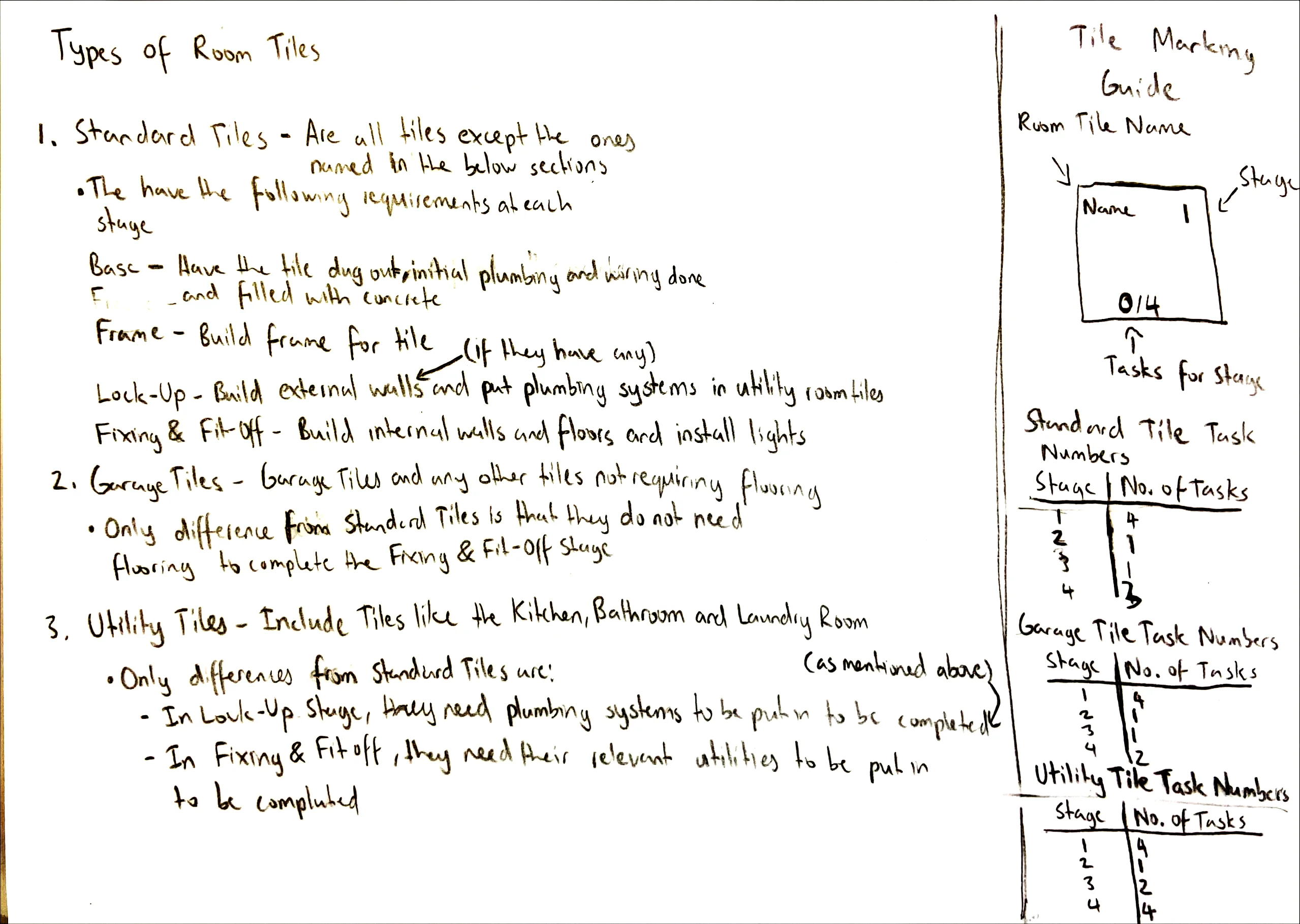
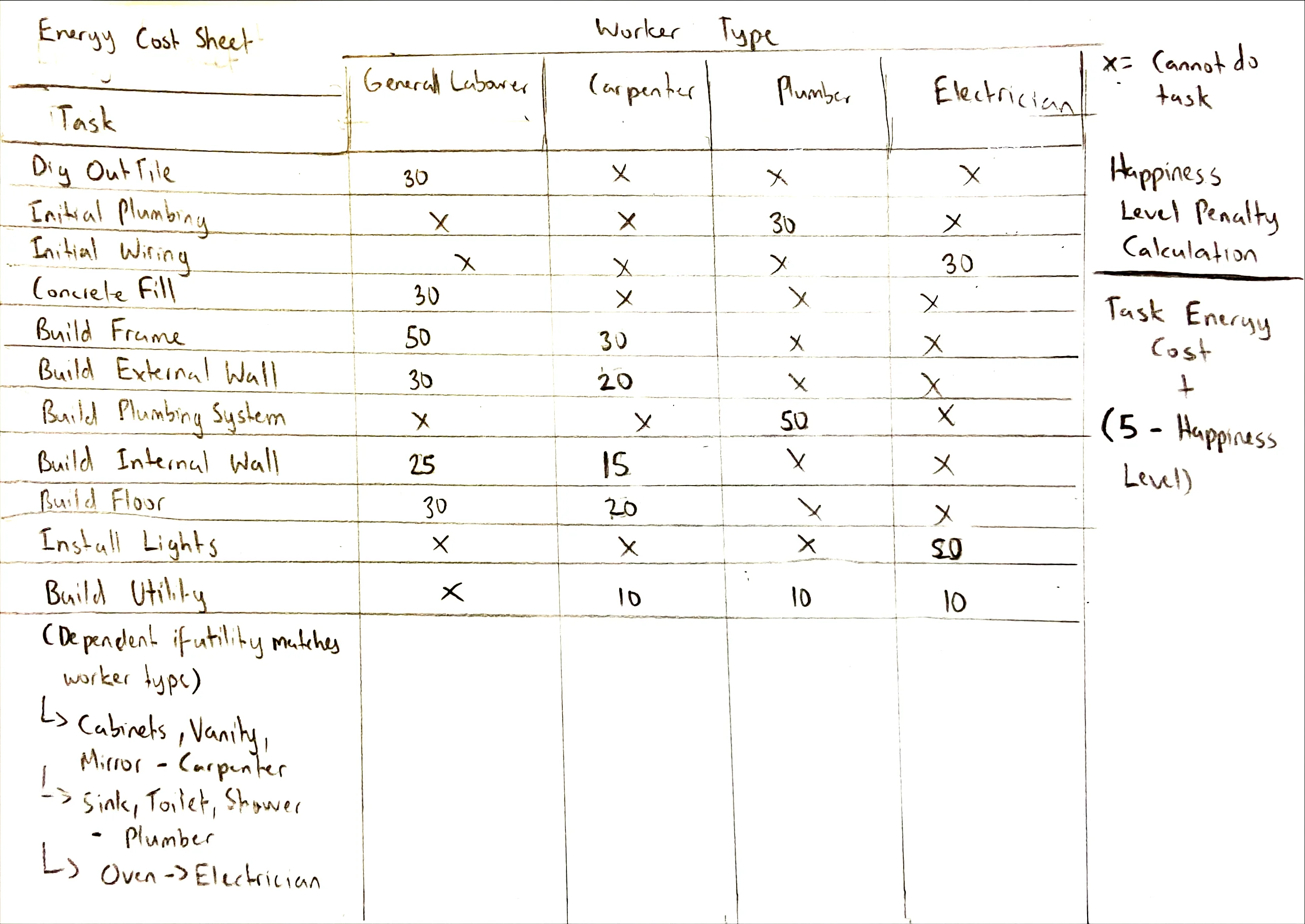
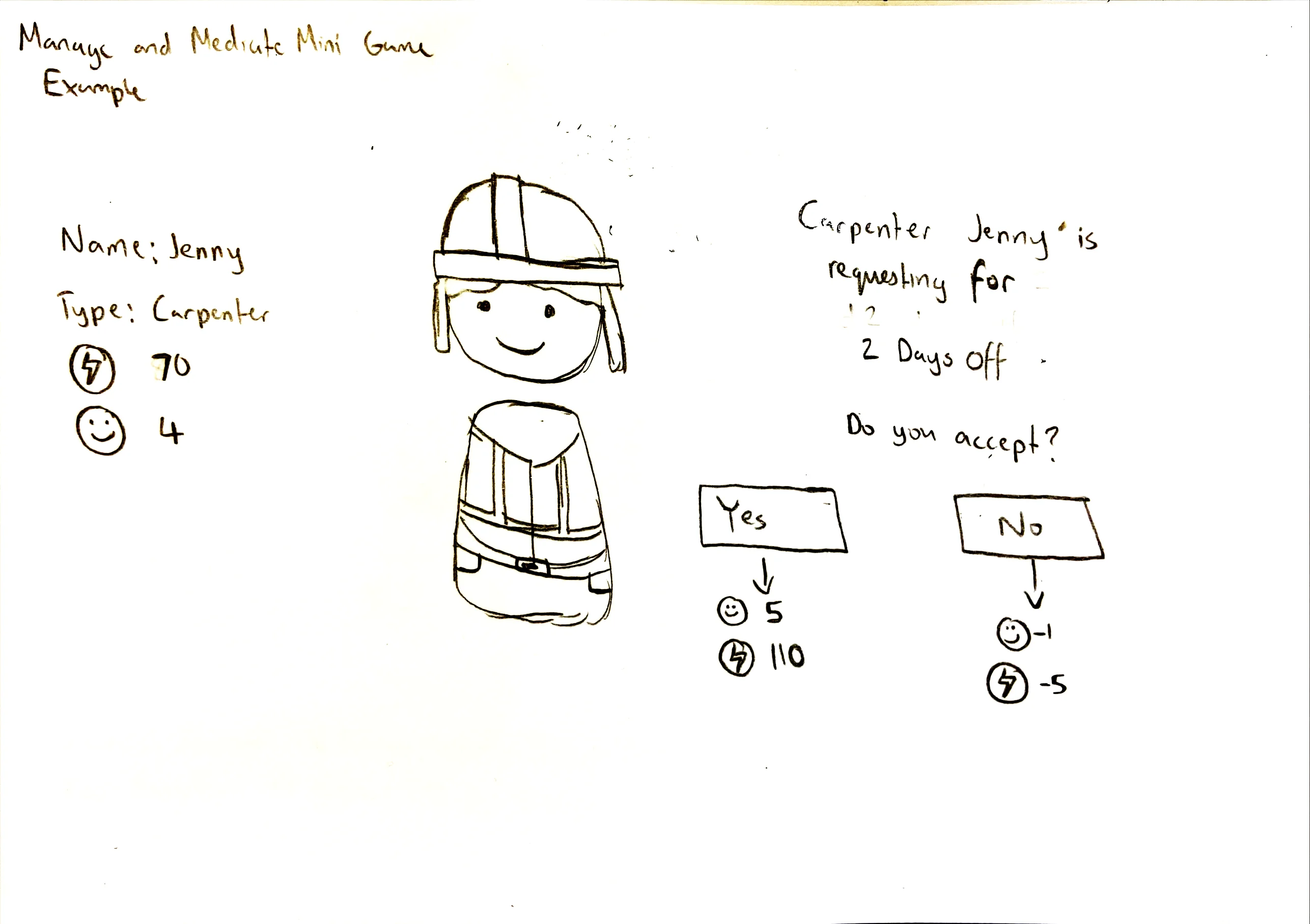
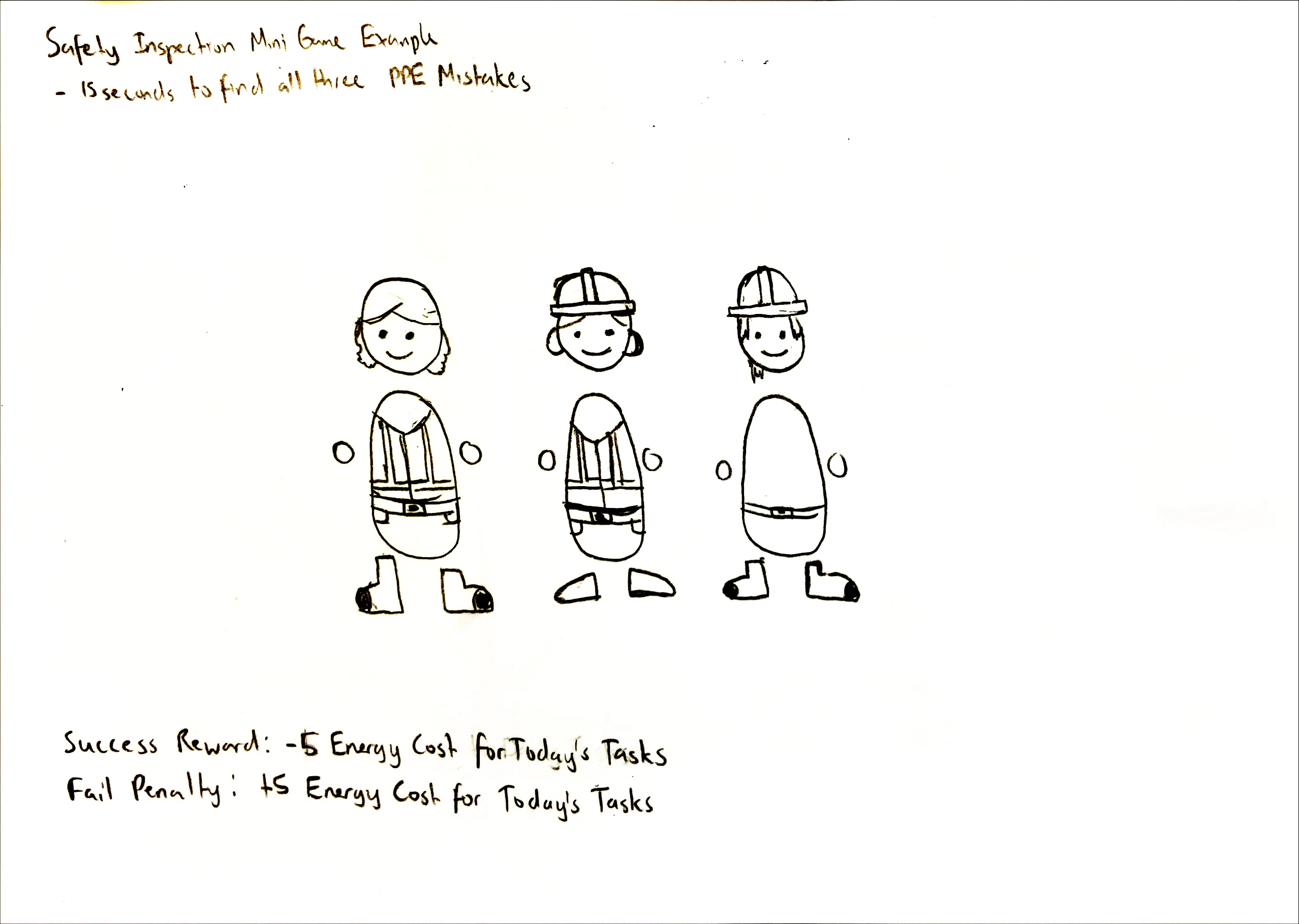
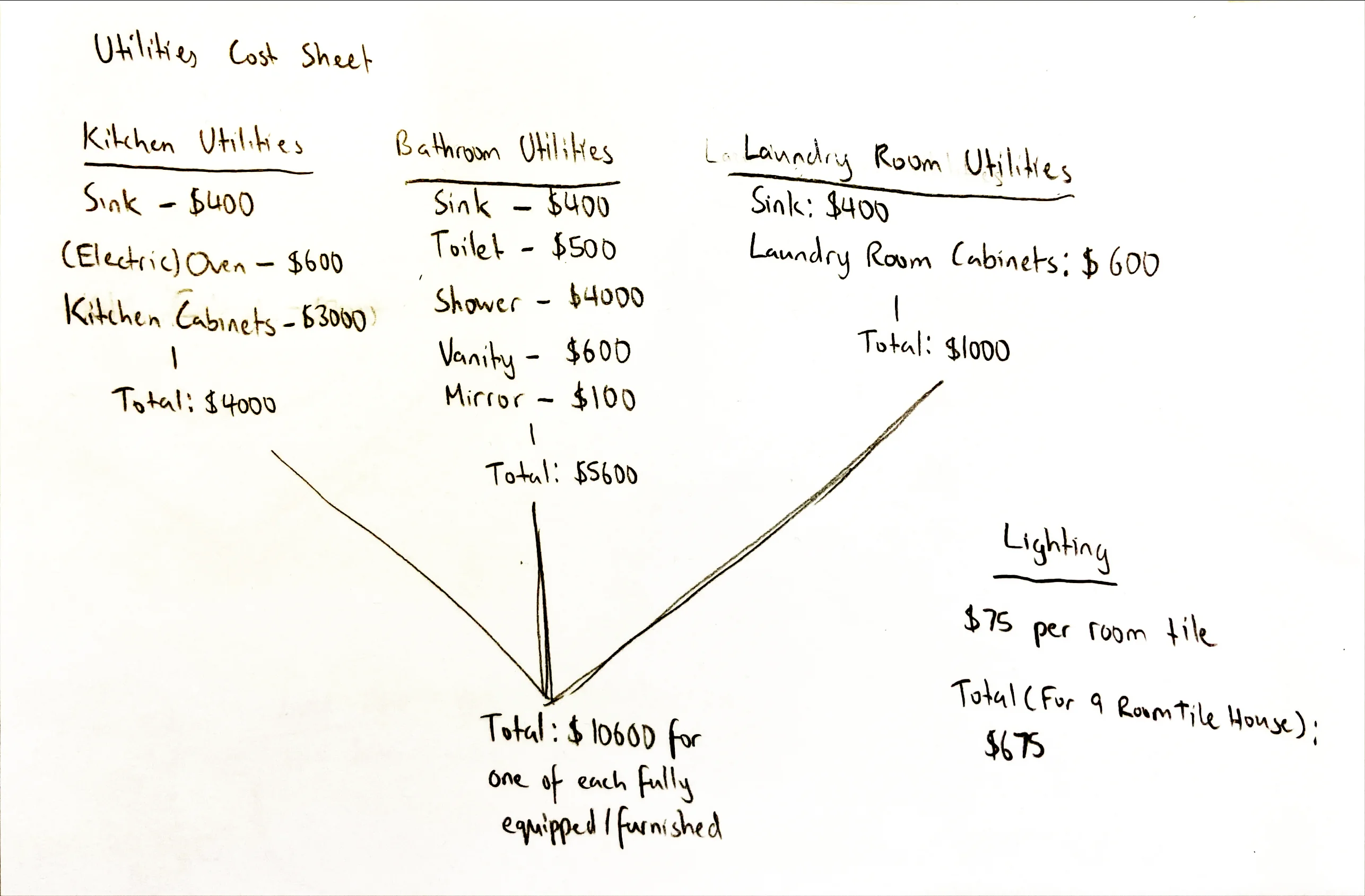
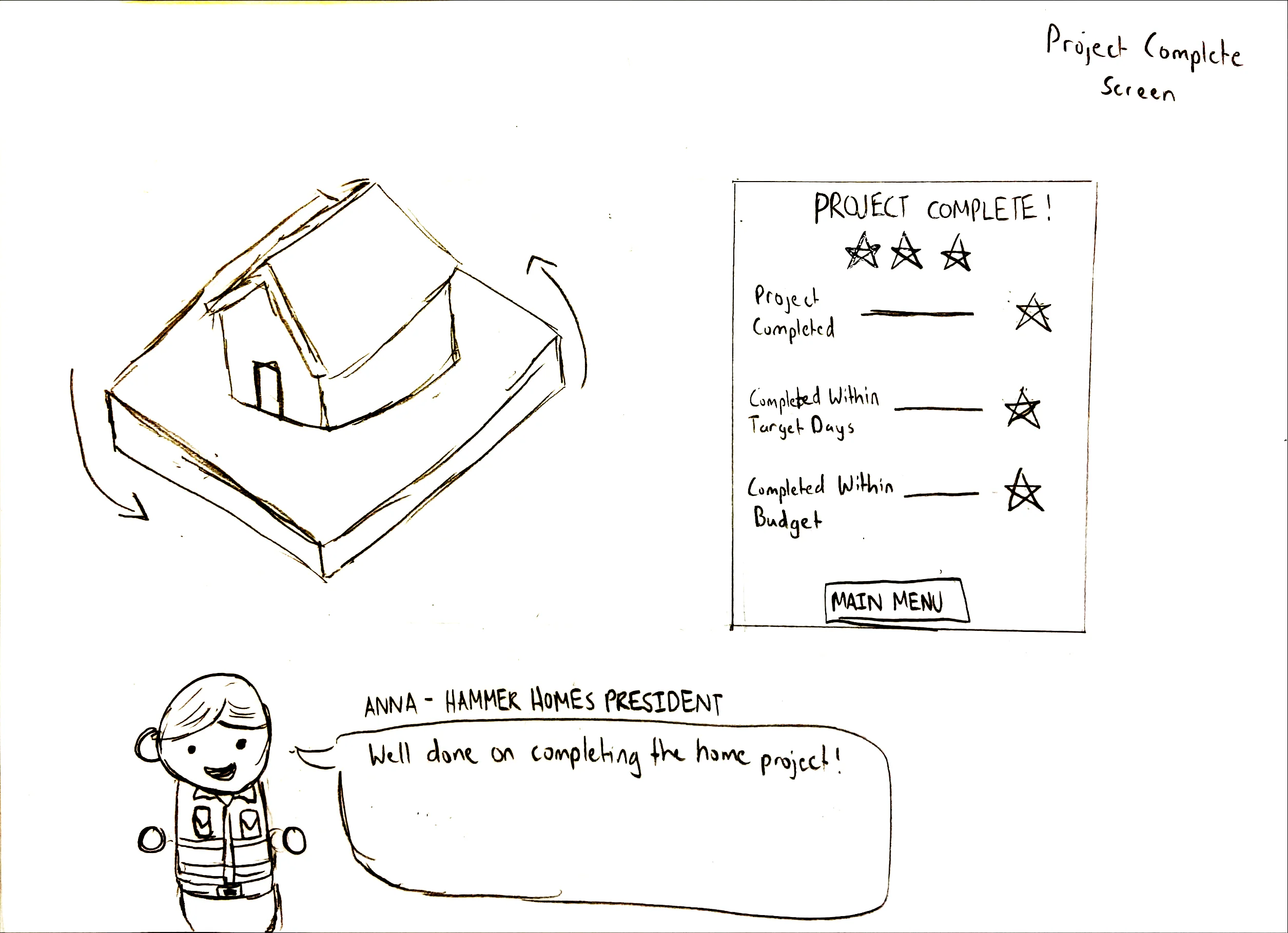
Playtesting revealed that a real-time format felt chaotic and difficult to manage. We pivoted to a turn-based structure with a limited number of days per project and an energy system per day.
Storyboards & Refined Screen Mockups
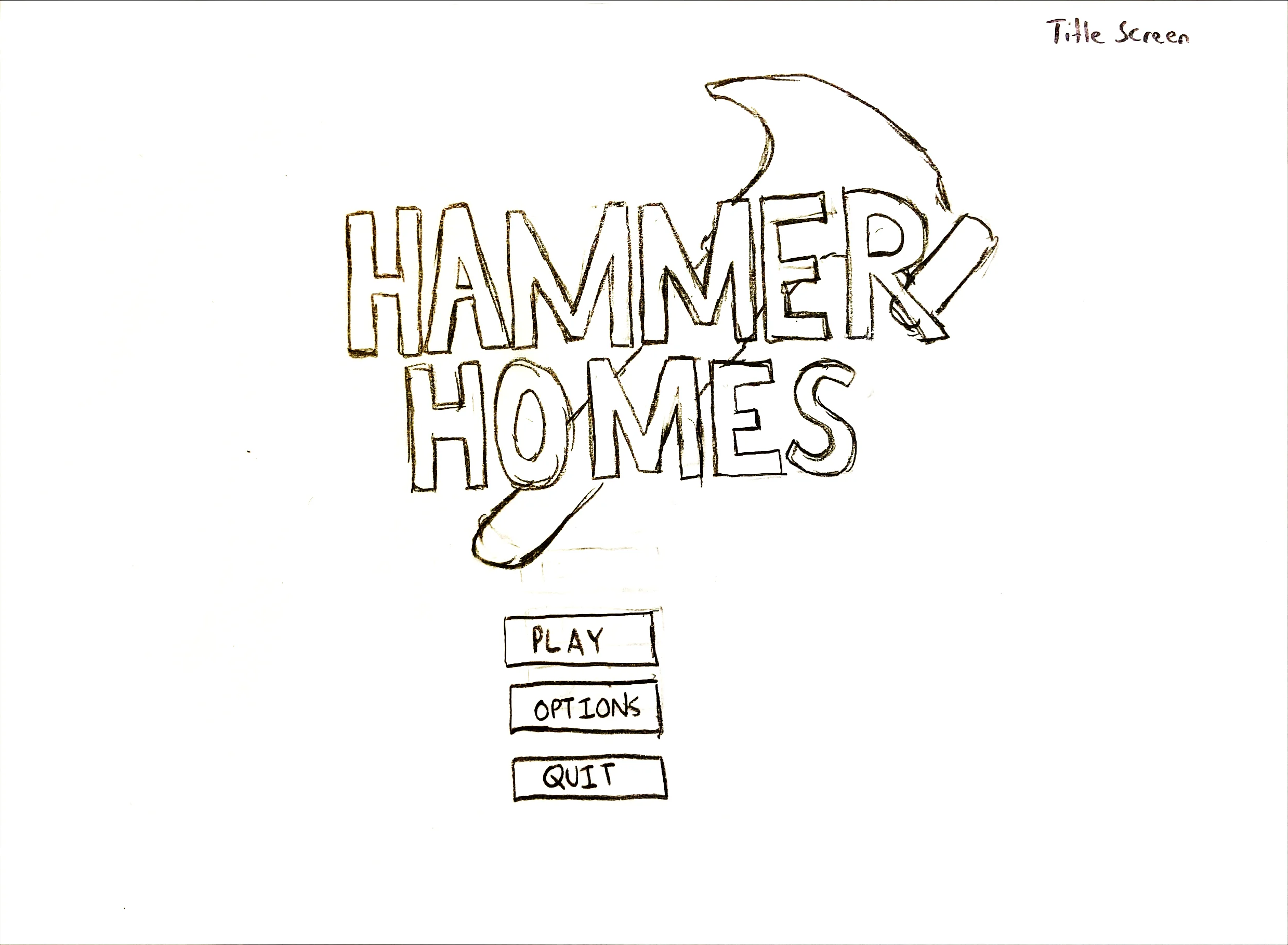
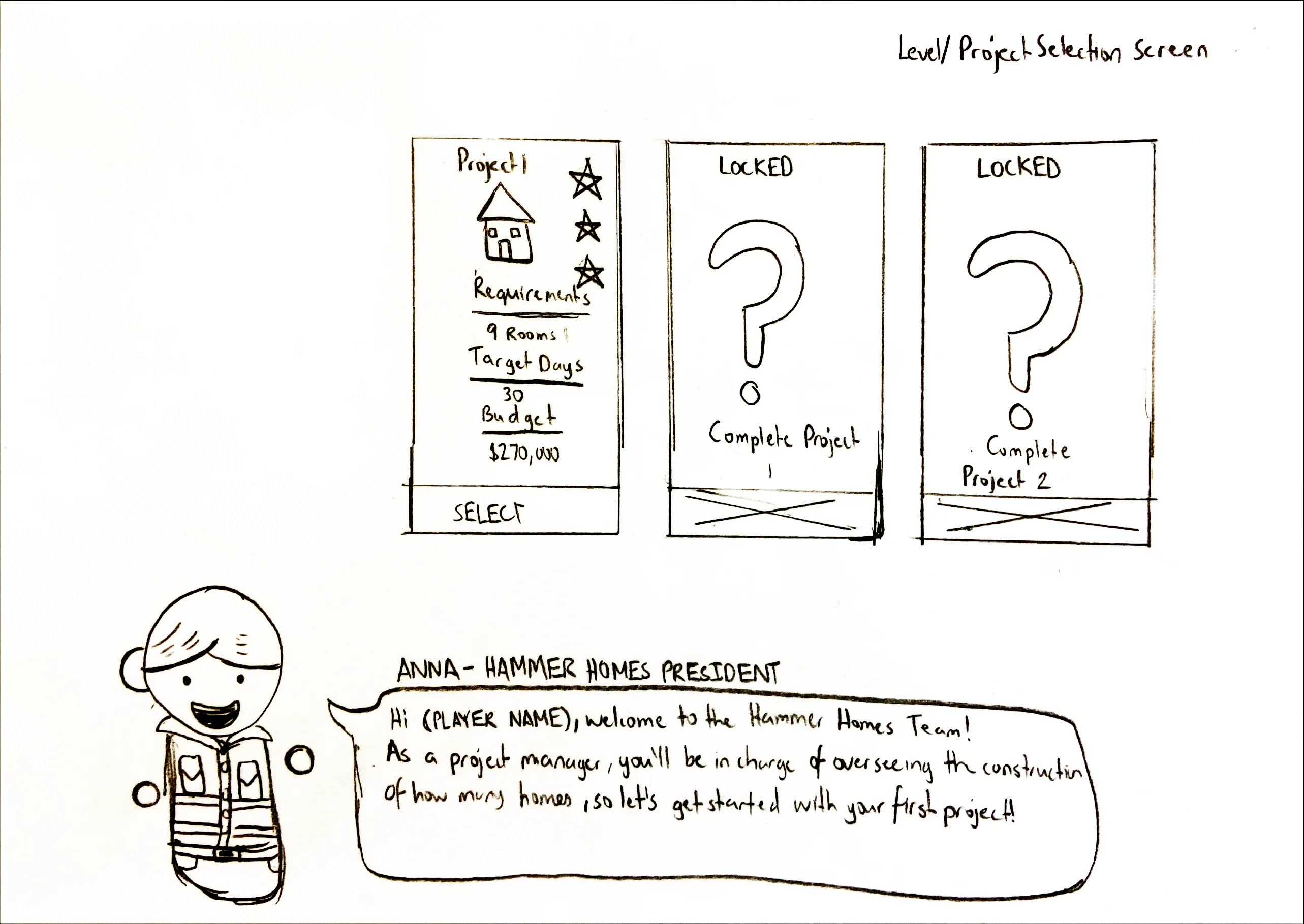
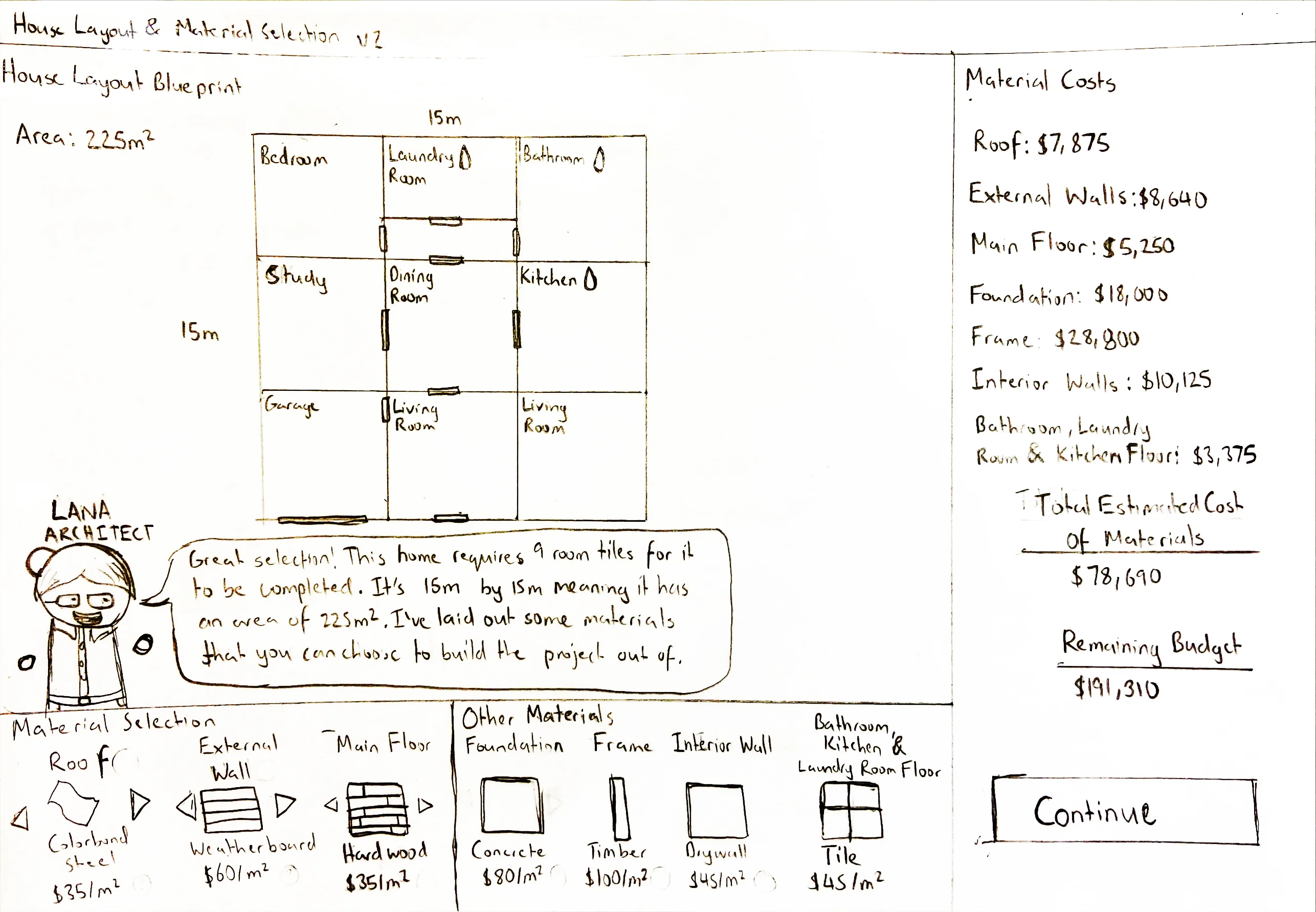
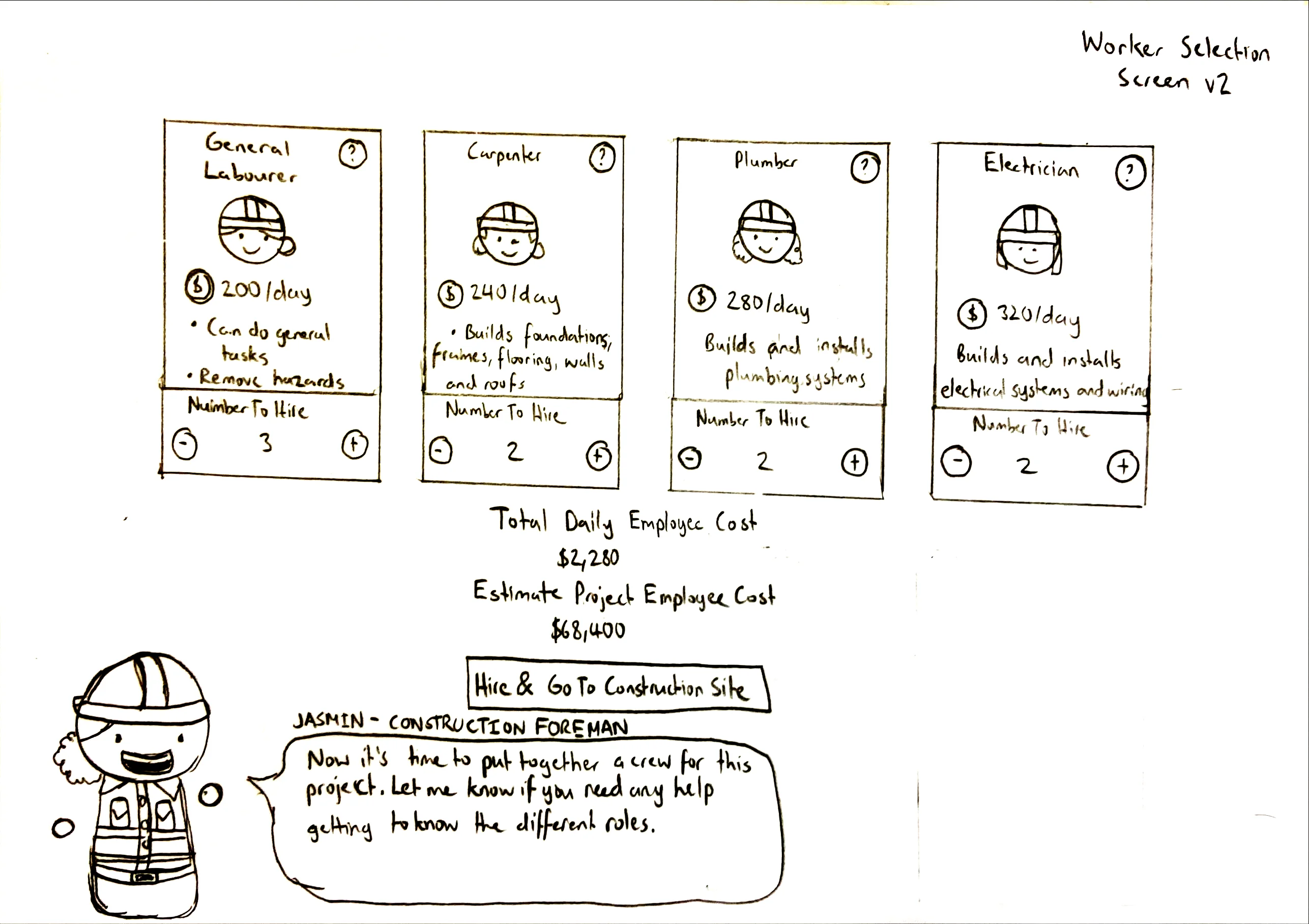
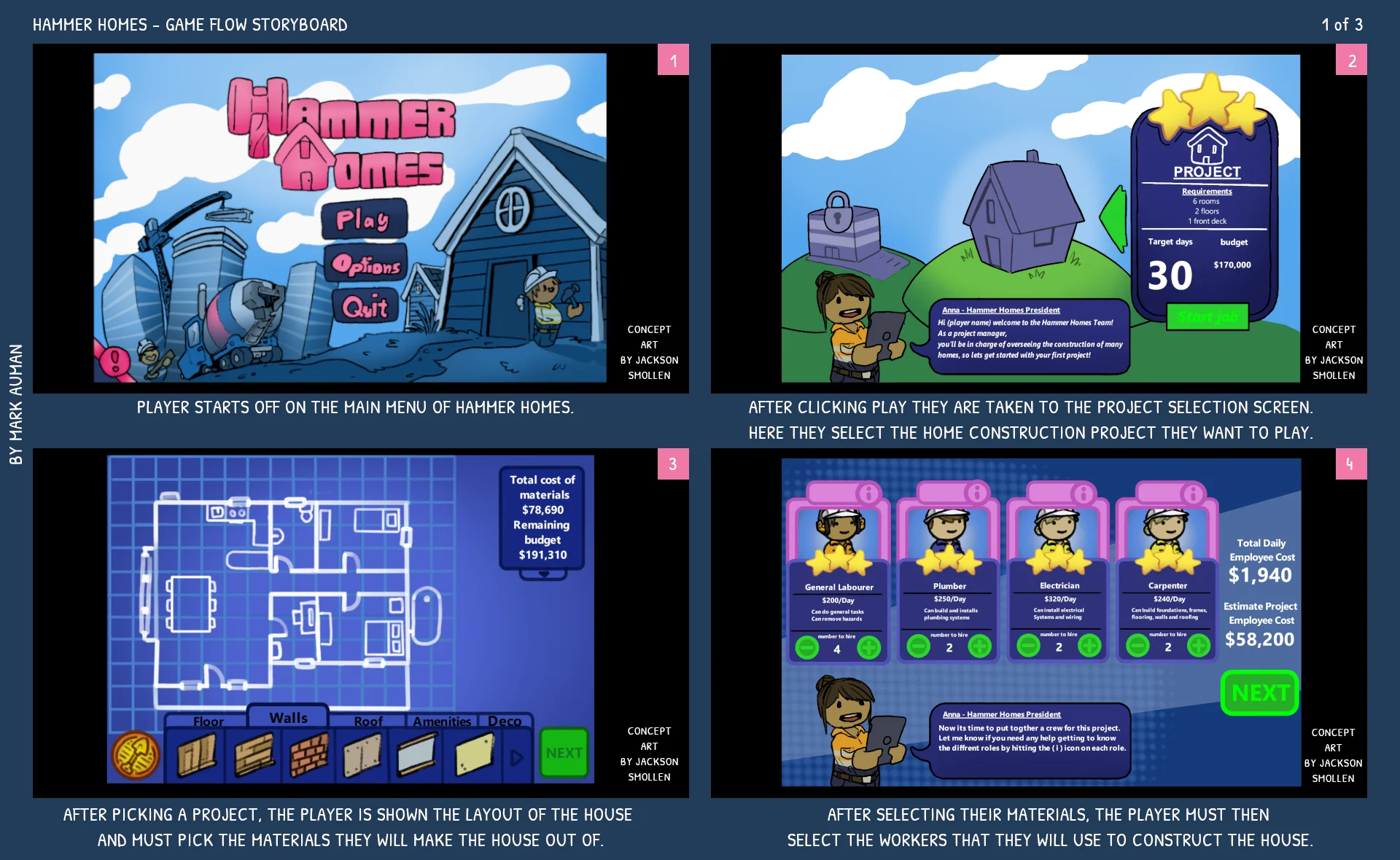
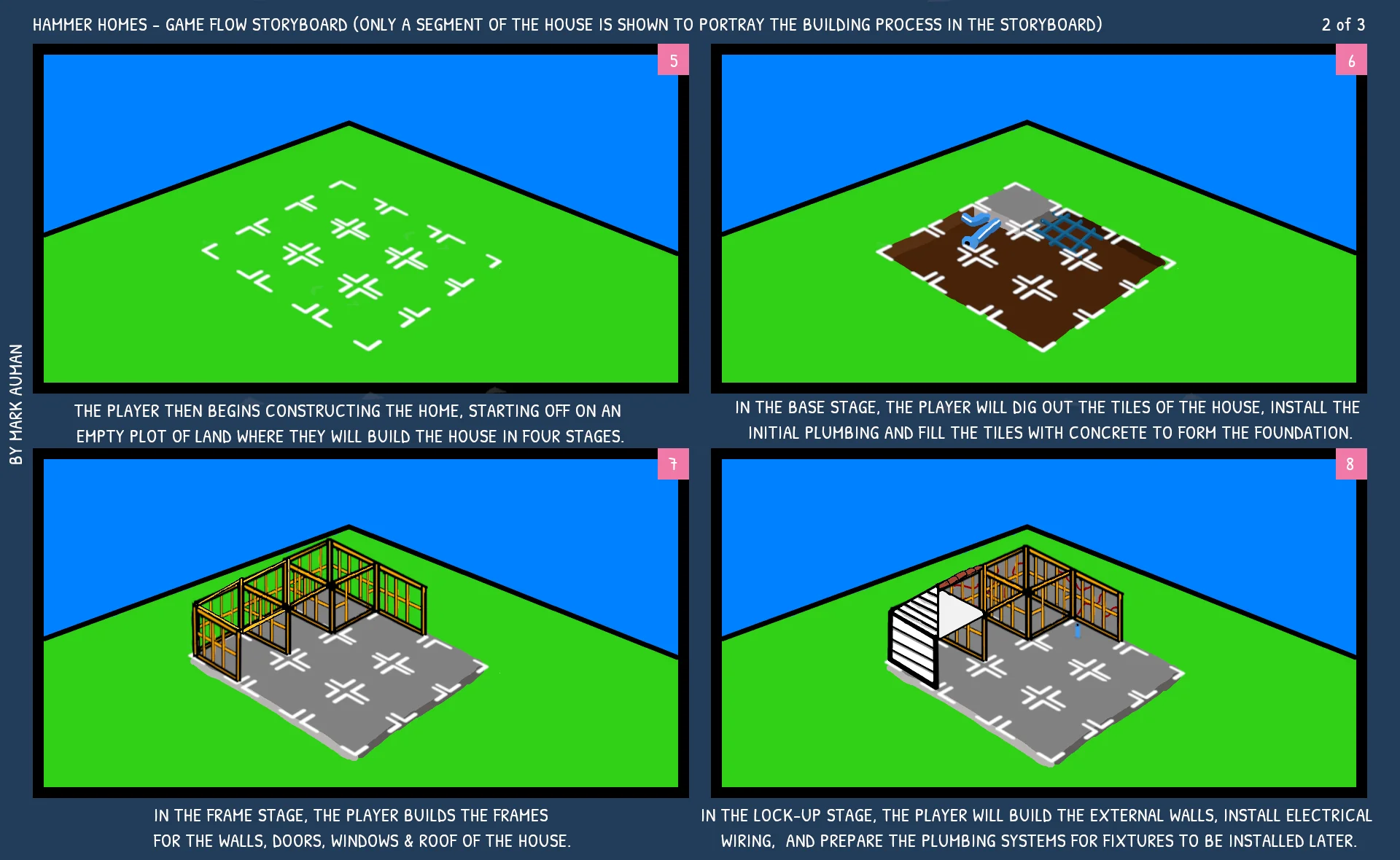
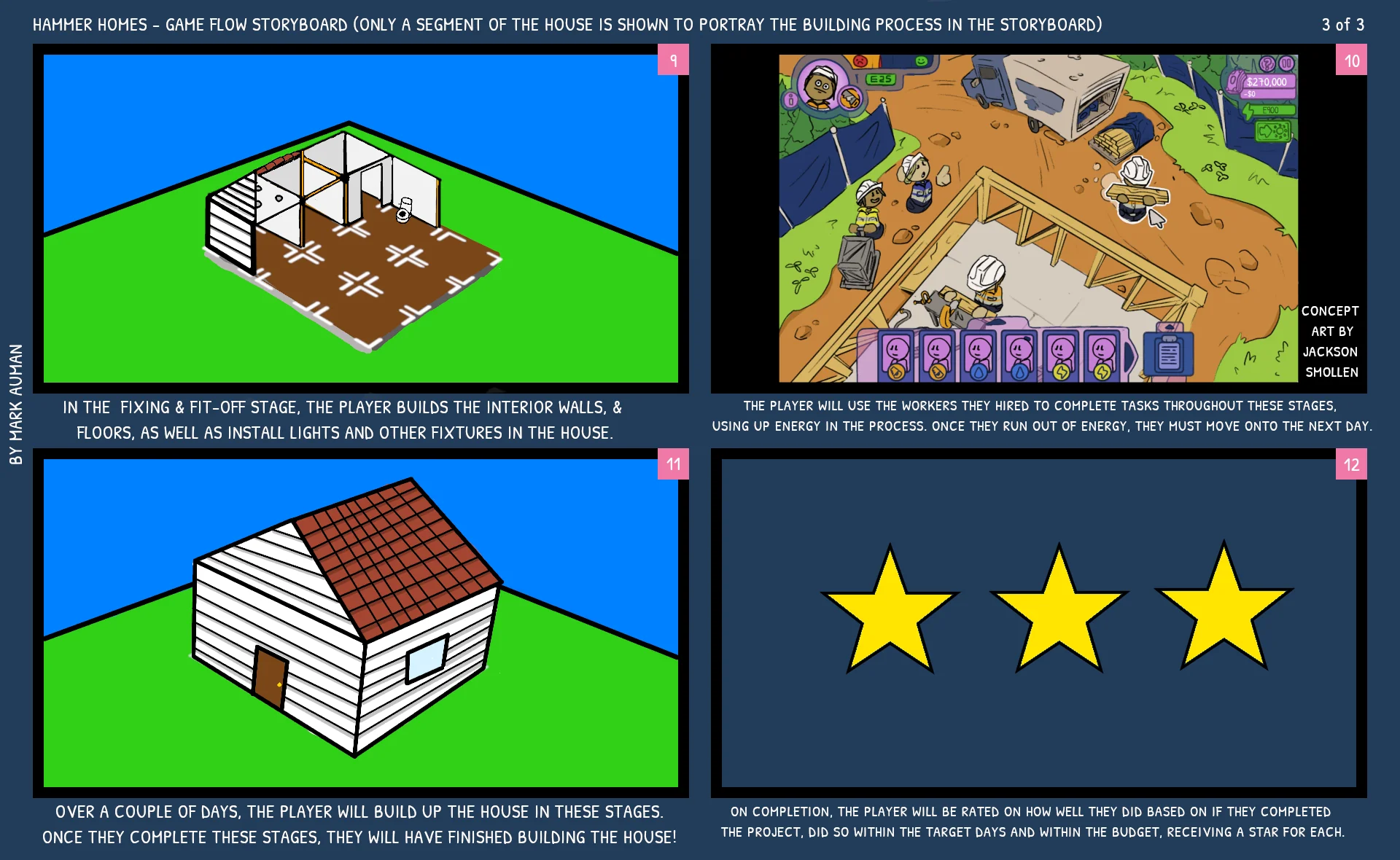
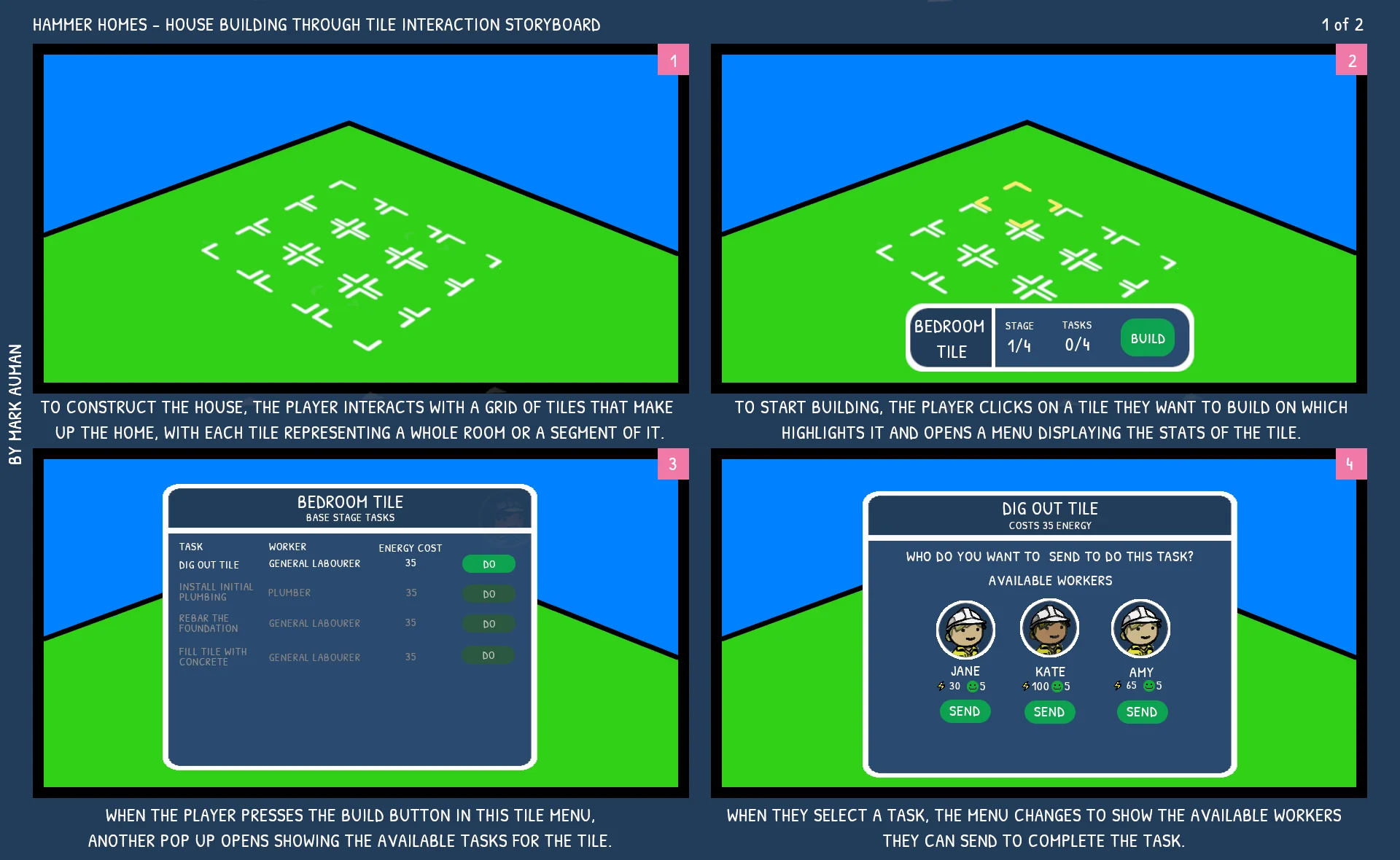
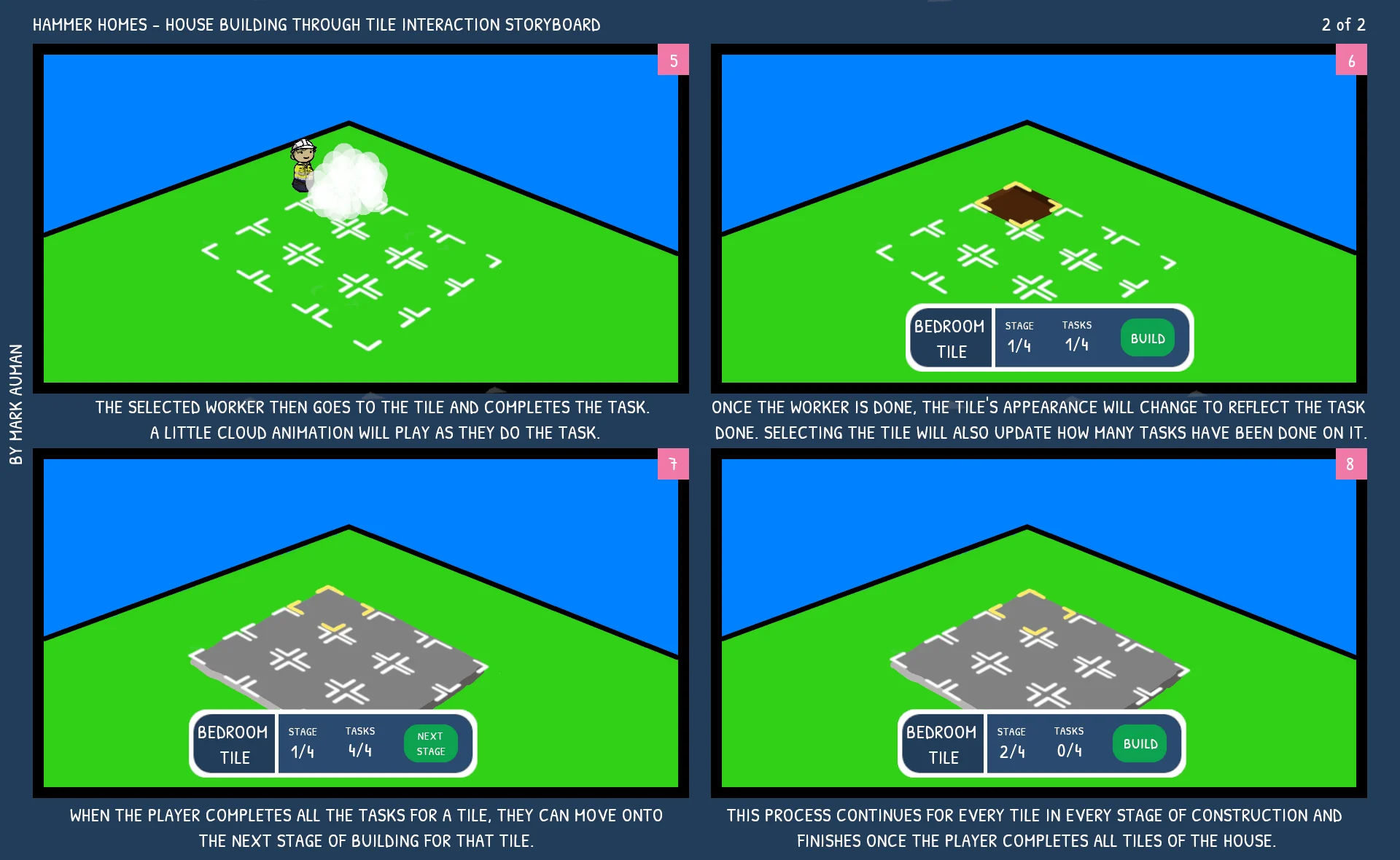
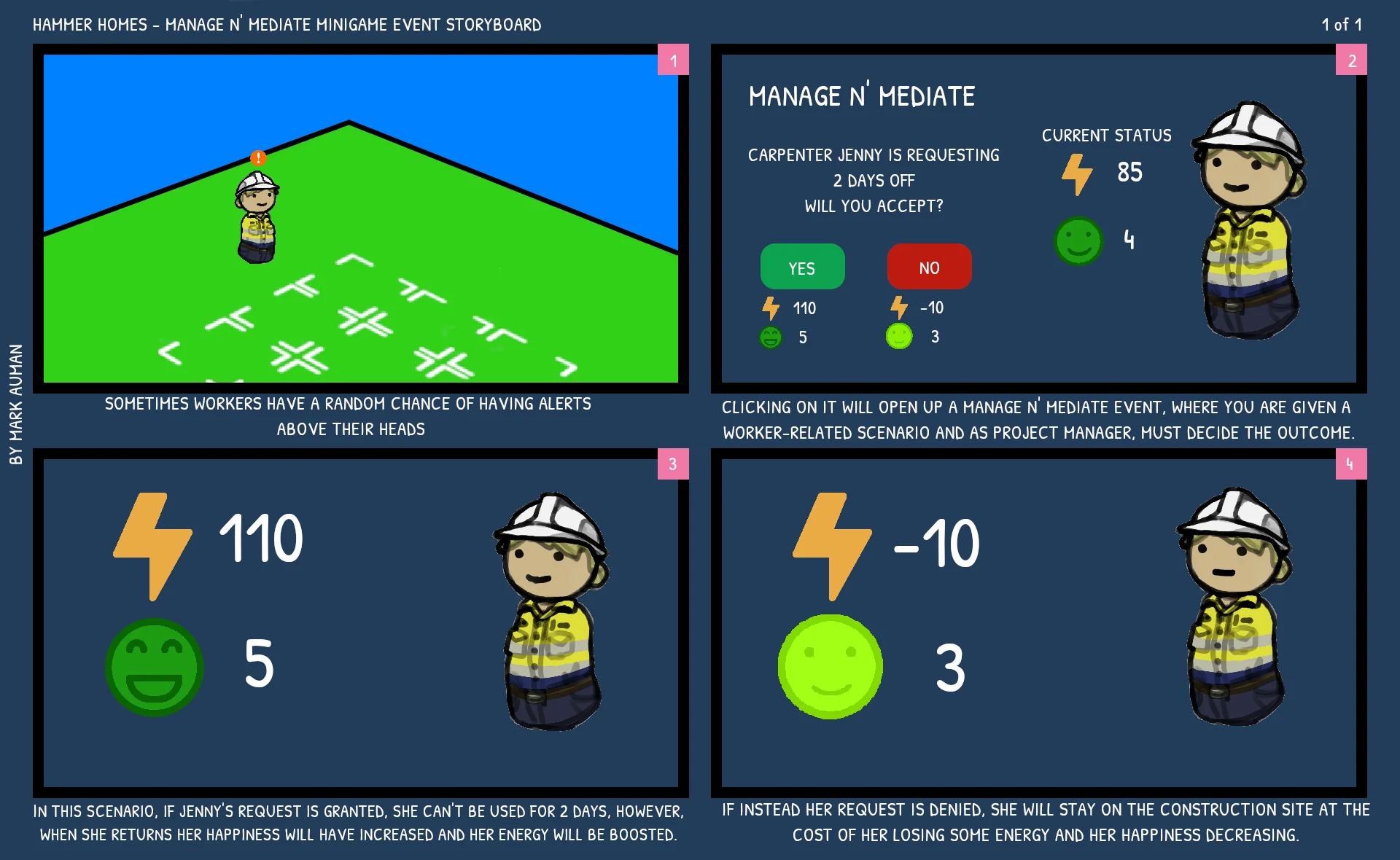
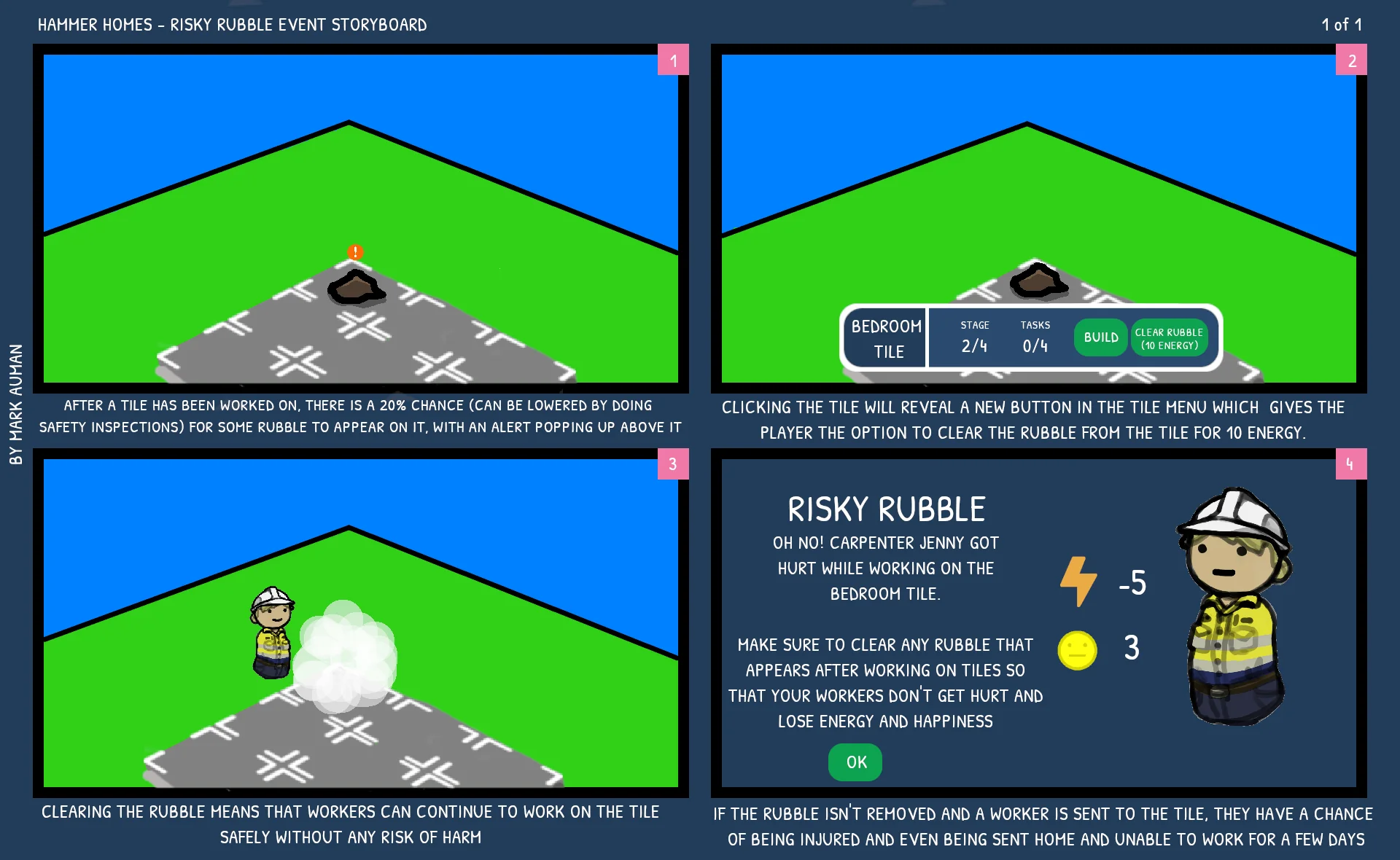
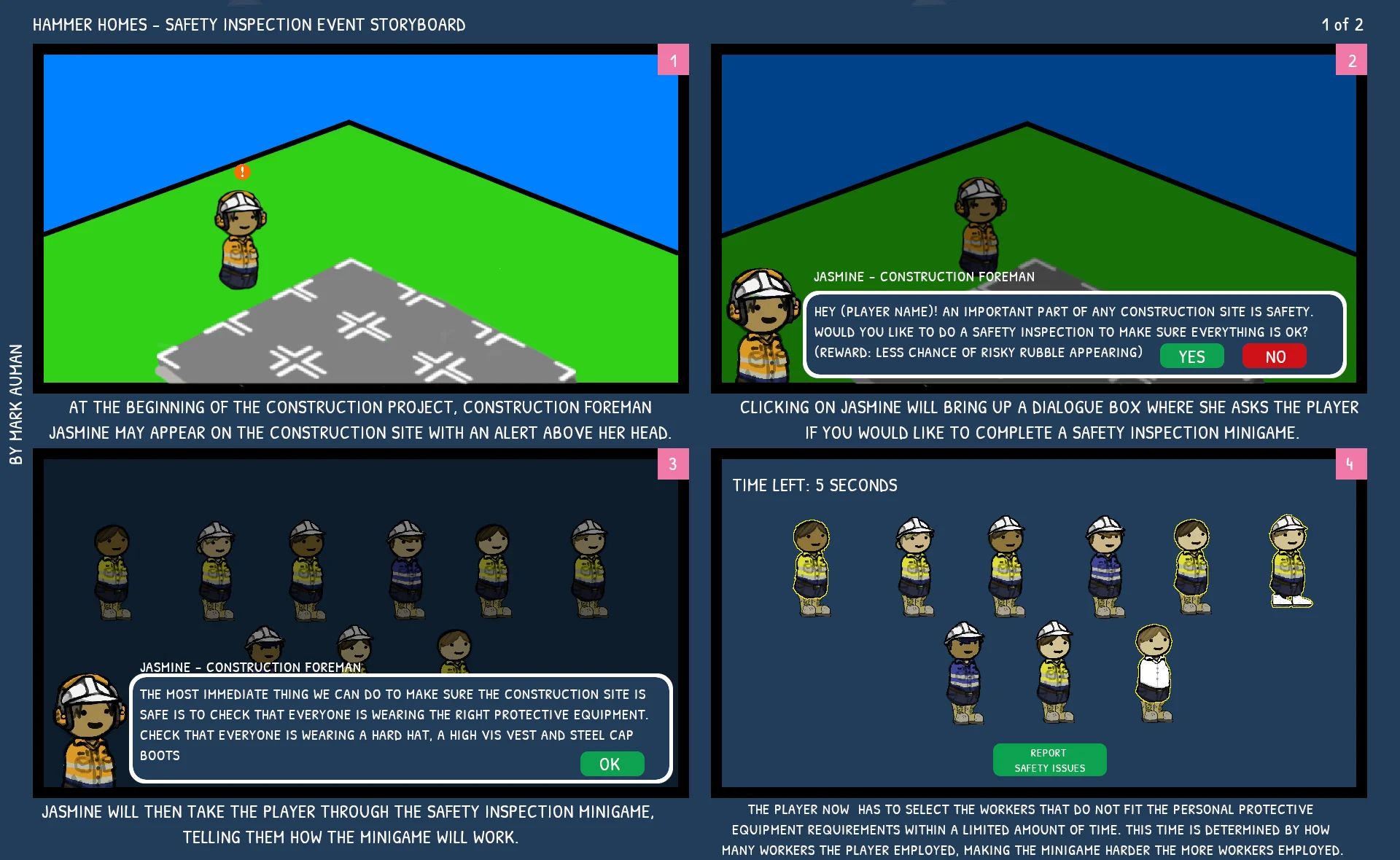
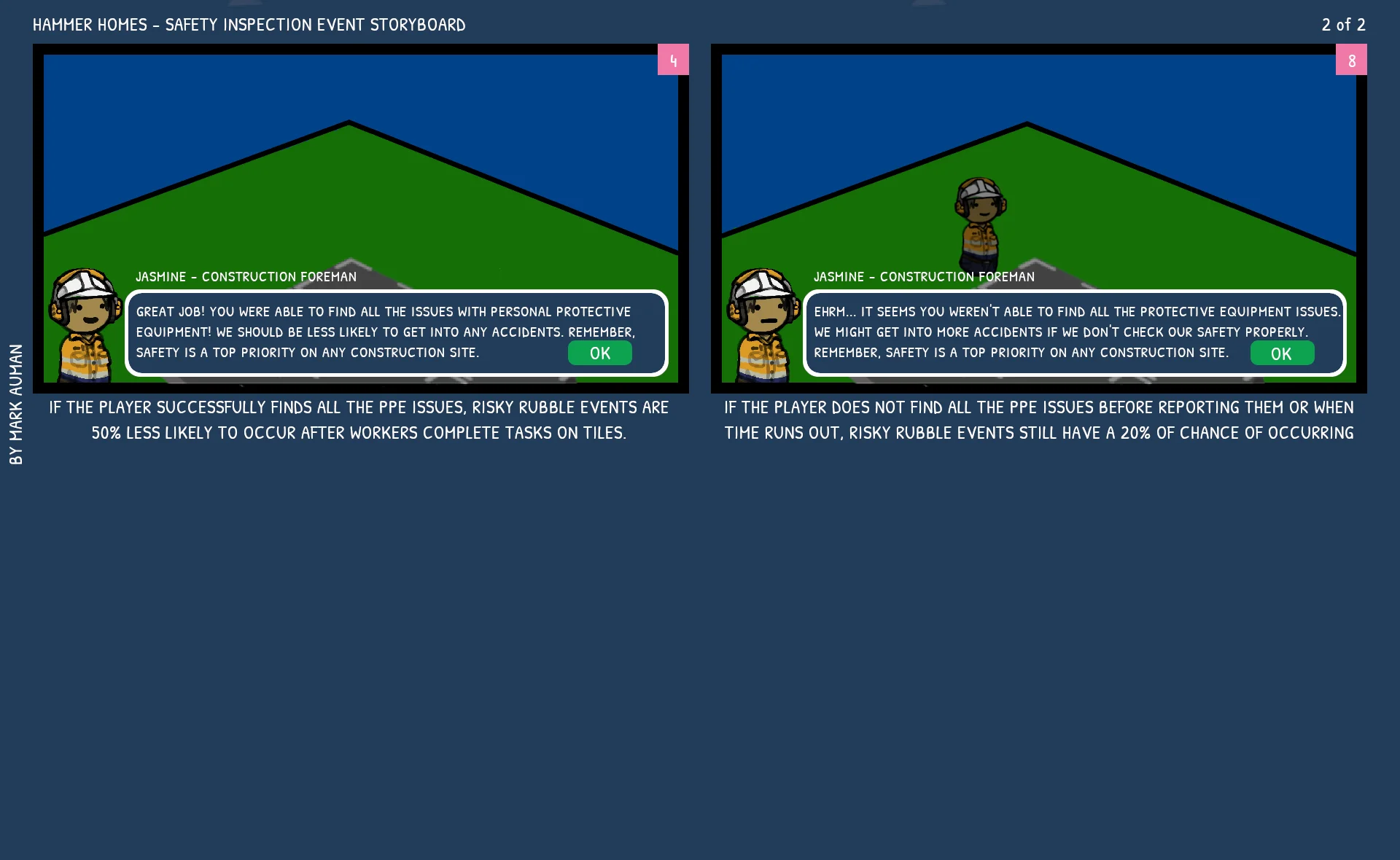
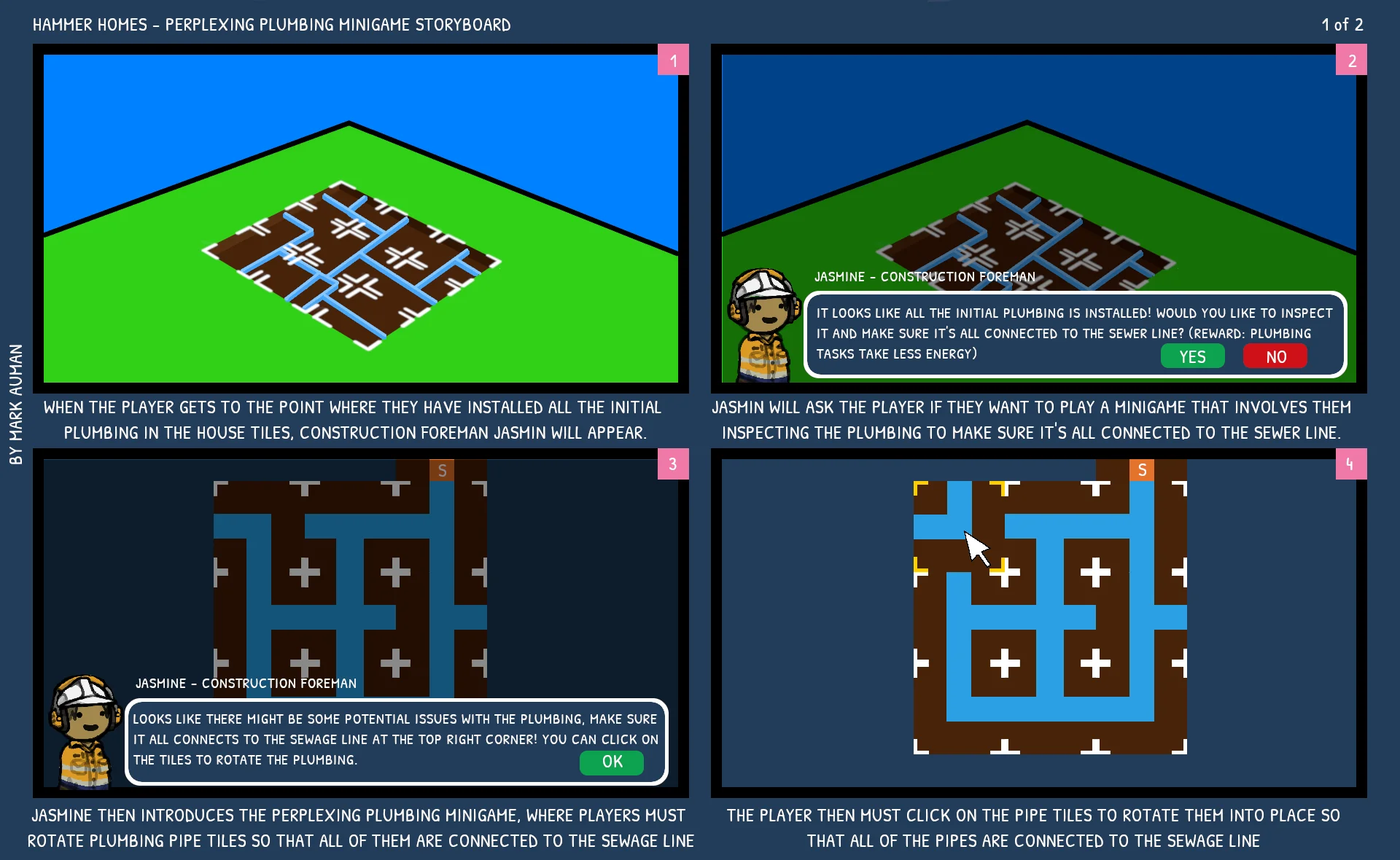
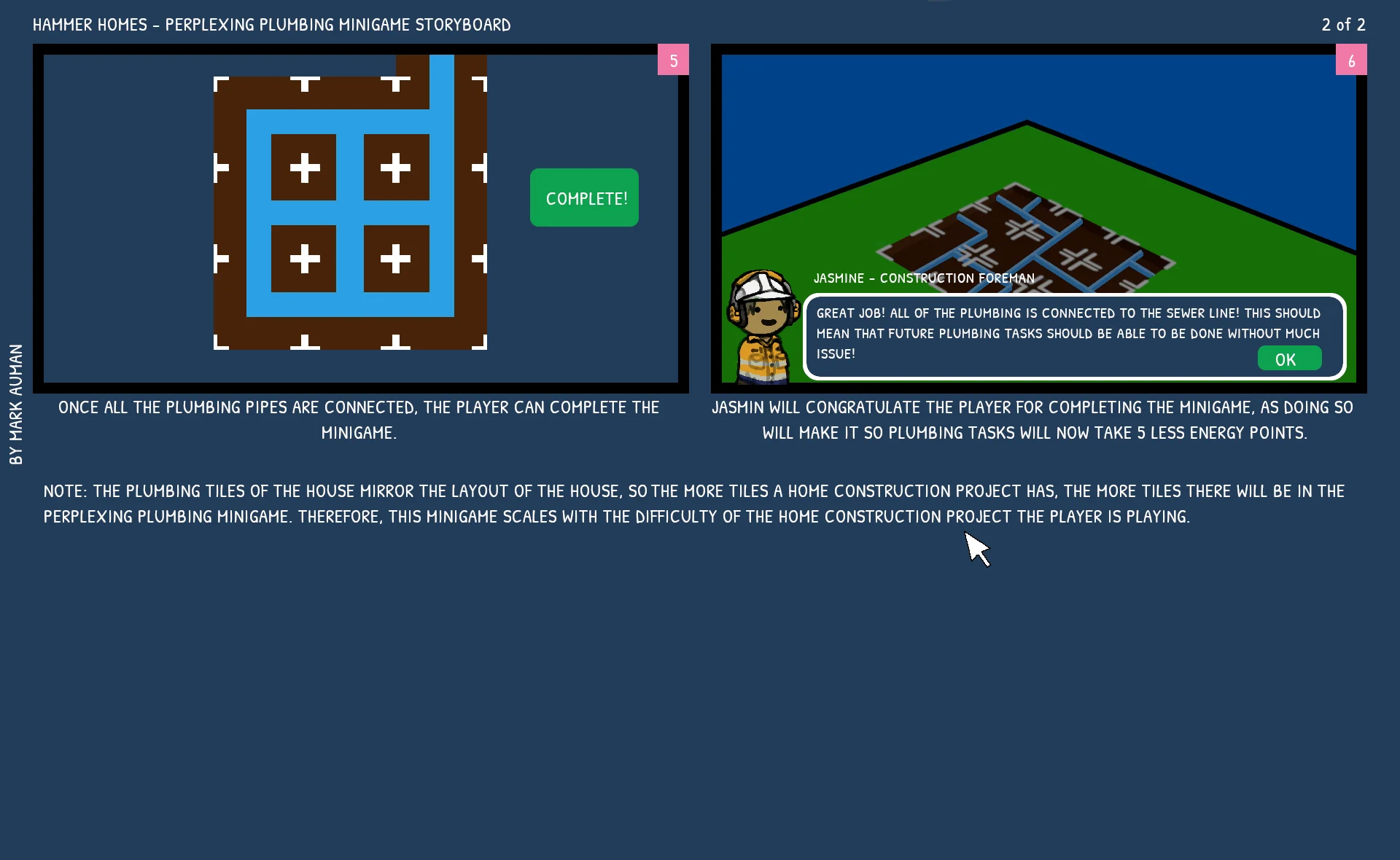
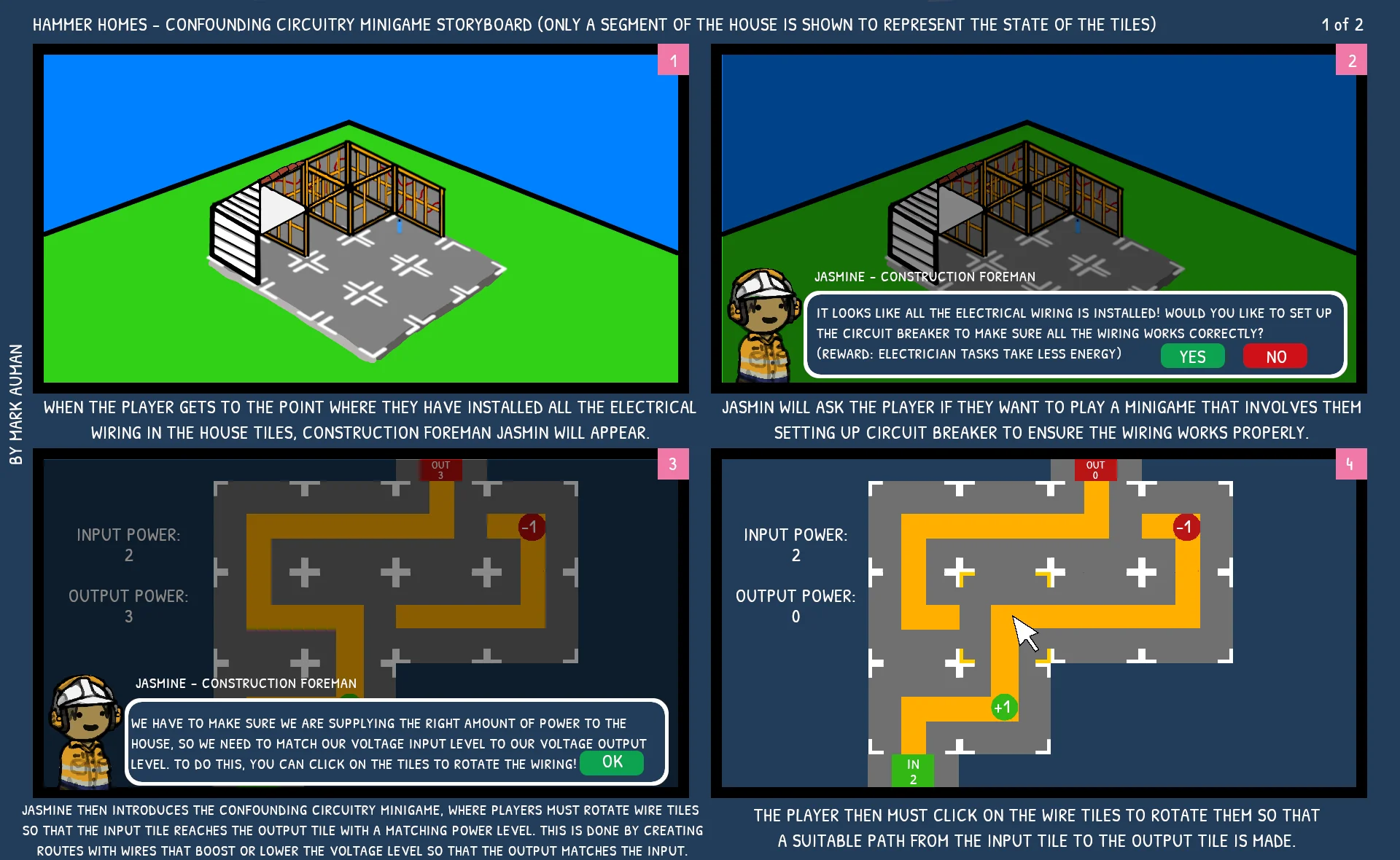
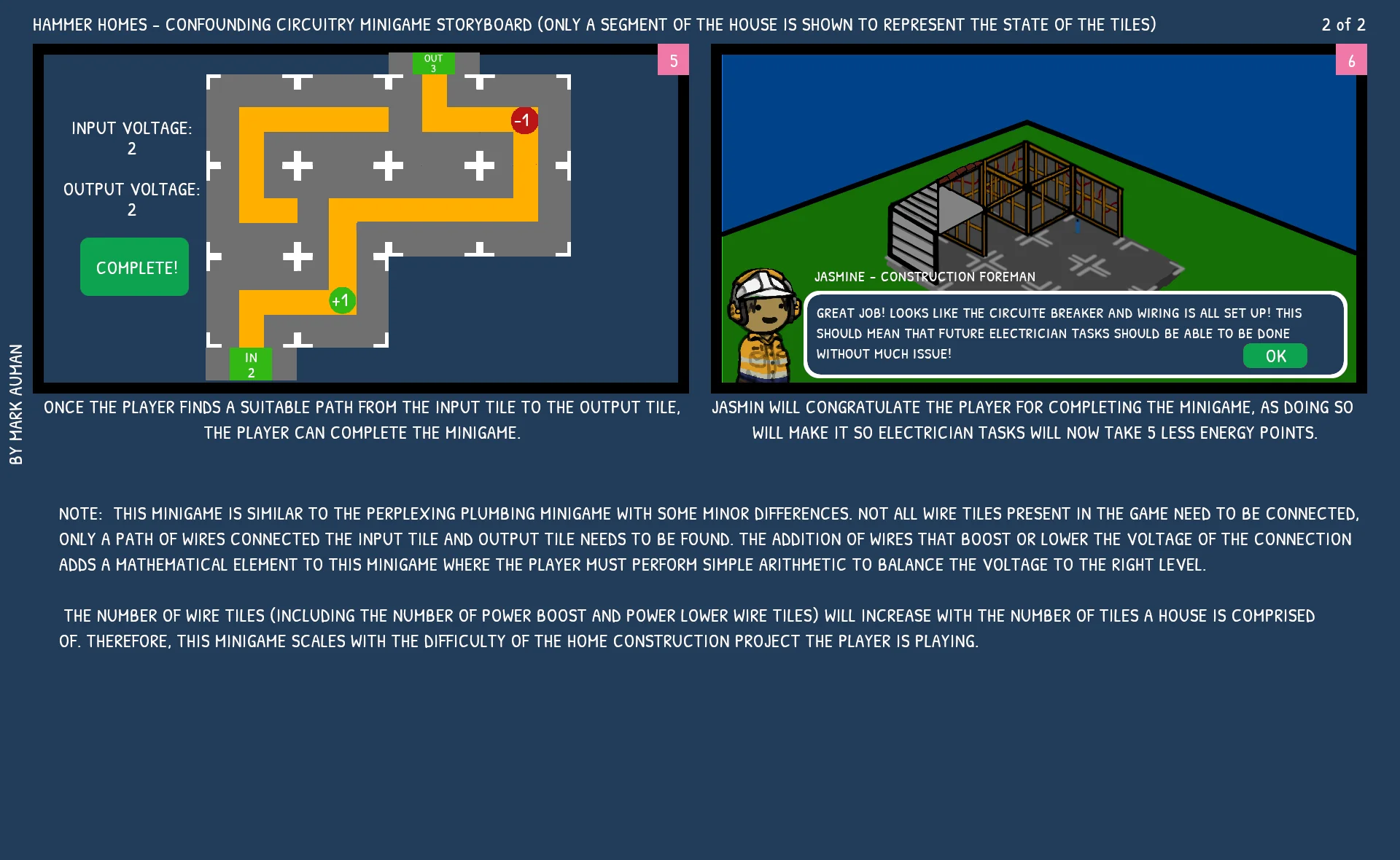
With the core loop established, I collaborated with our artist to produce storyboards and refined screen mockups. These covered the full player flow from the main menu through to project selection, worker assignment, task execution, and project completion. This stage helped the team align on the visual language before any digital work began, and gave us a clear reference to build toward in the prototype.
Early Prototype Development
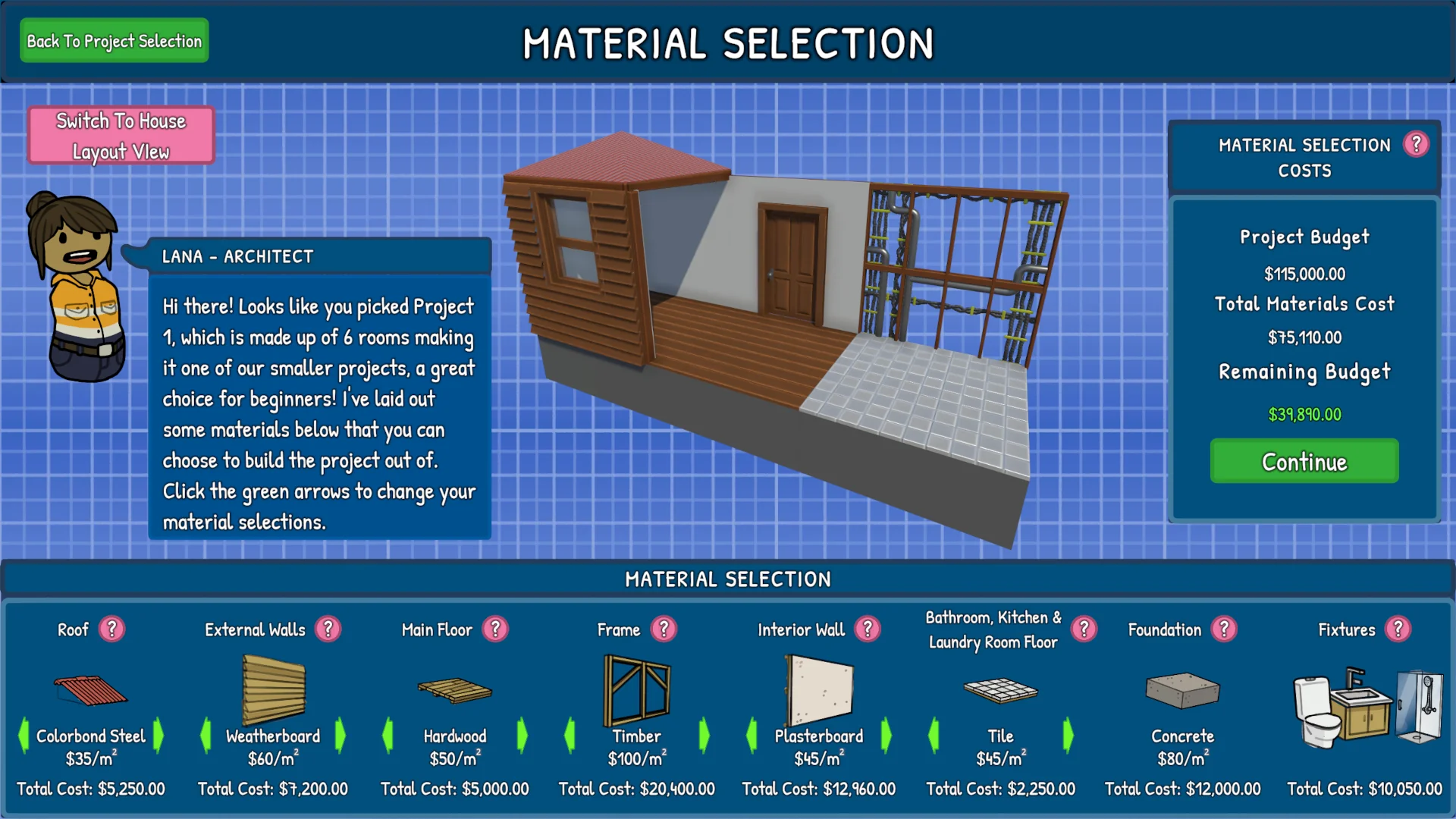
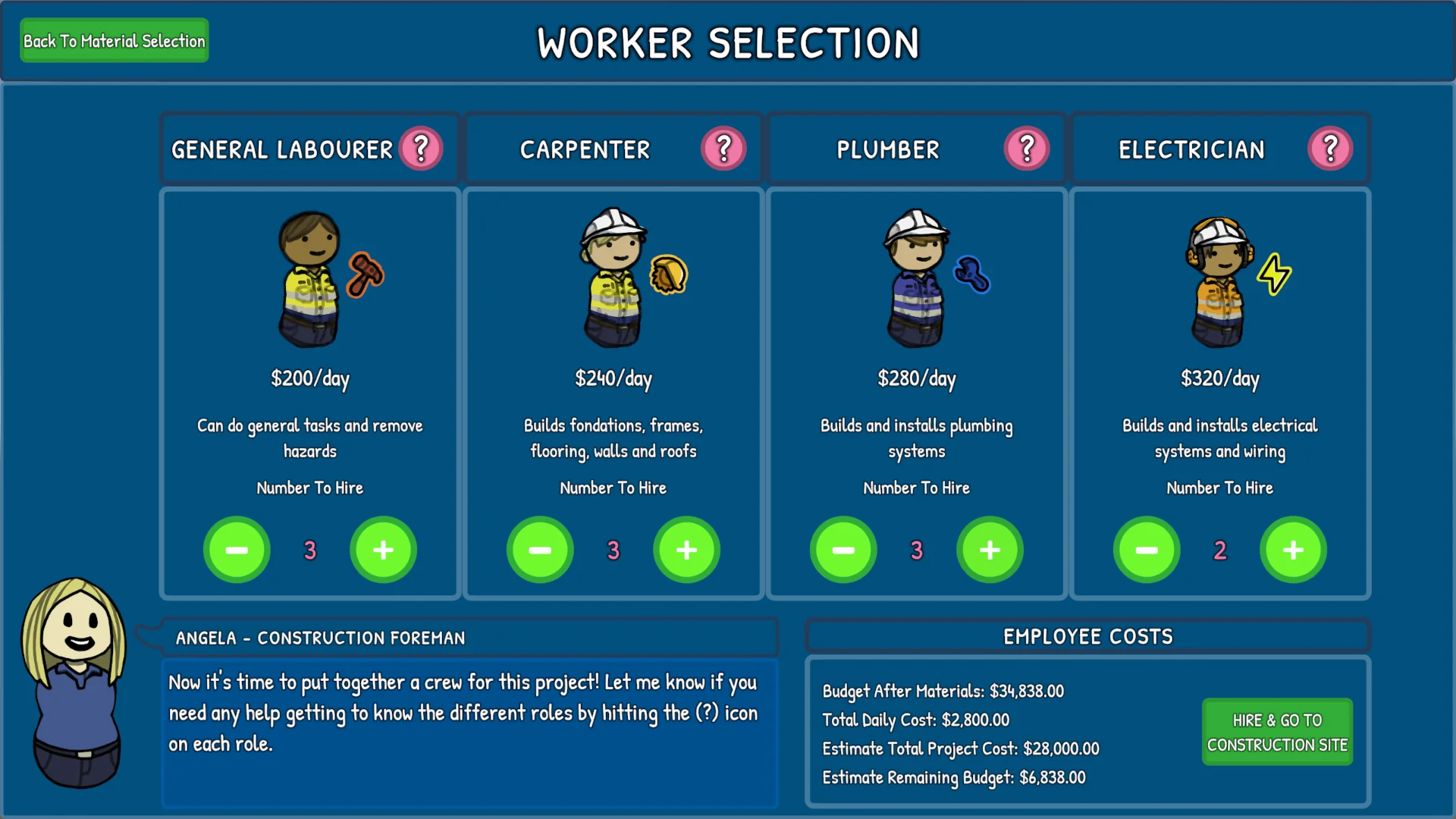
Our early milestone required a working prototype demonstrating the core game flow. I focused on the UI side - building out the menus for project selection, material selection, and worker assignment screens. Getting these screens functional early allowed the rest of the team to test the backend systems against real UI as development progressed.
Further Game Development

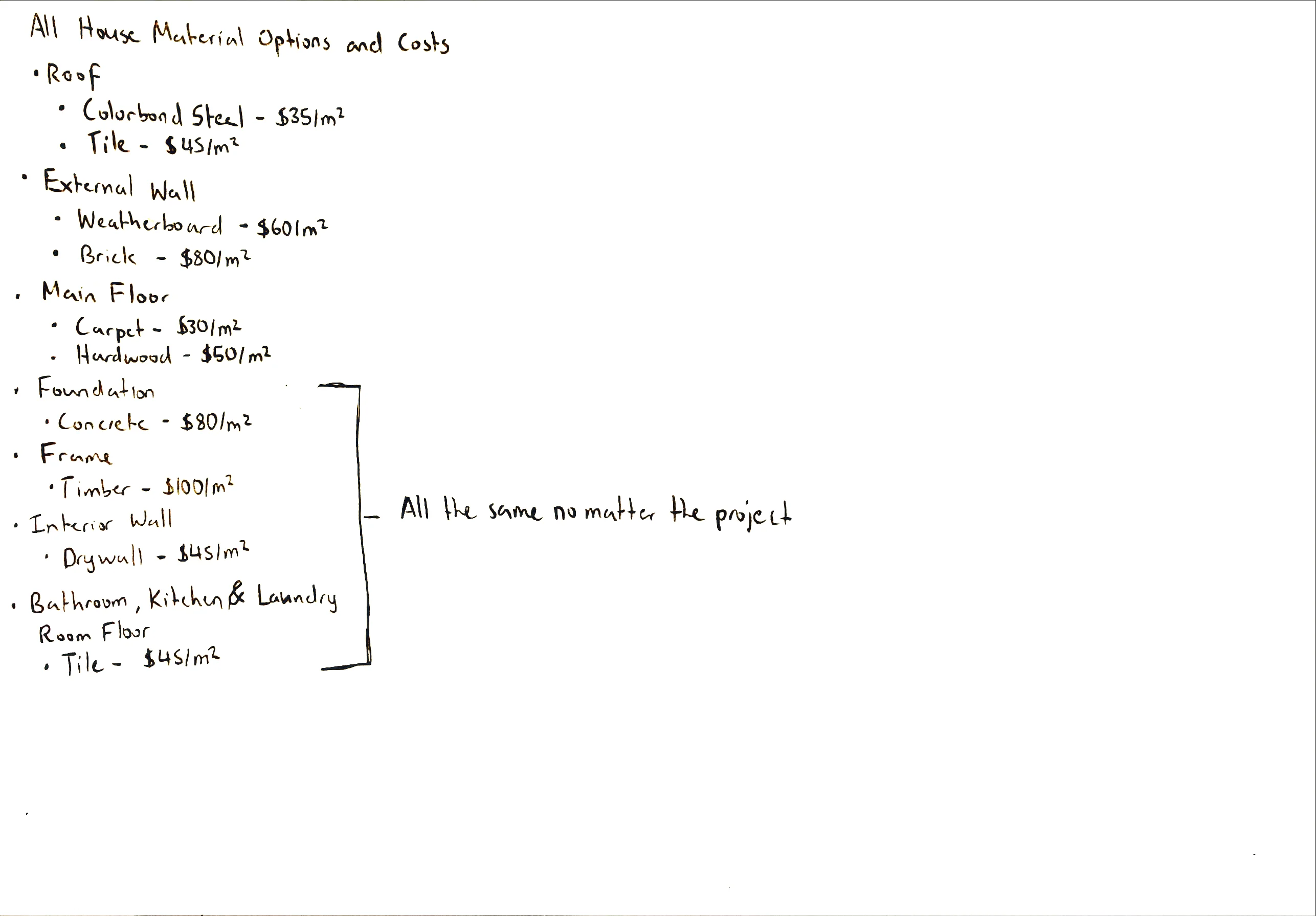
Development continued through a series of sprints. In the first sprint I made all the UI menus fully functional and integrated them with the backend systems built by our programmer. The second sprint was the most intensive - I implemented all construction tasks, the house material loading system (by far the most complex feature), worker budget mechanics, and a range of aesthetic UX improvements.

The final sprint brought the game together: gameplay feedback pop-ups, help buttons, scrolling dialogue, a reworked project completion ratings system, a "manage and mediate" event, team and profile panel UI refinements, and additional material options.
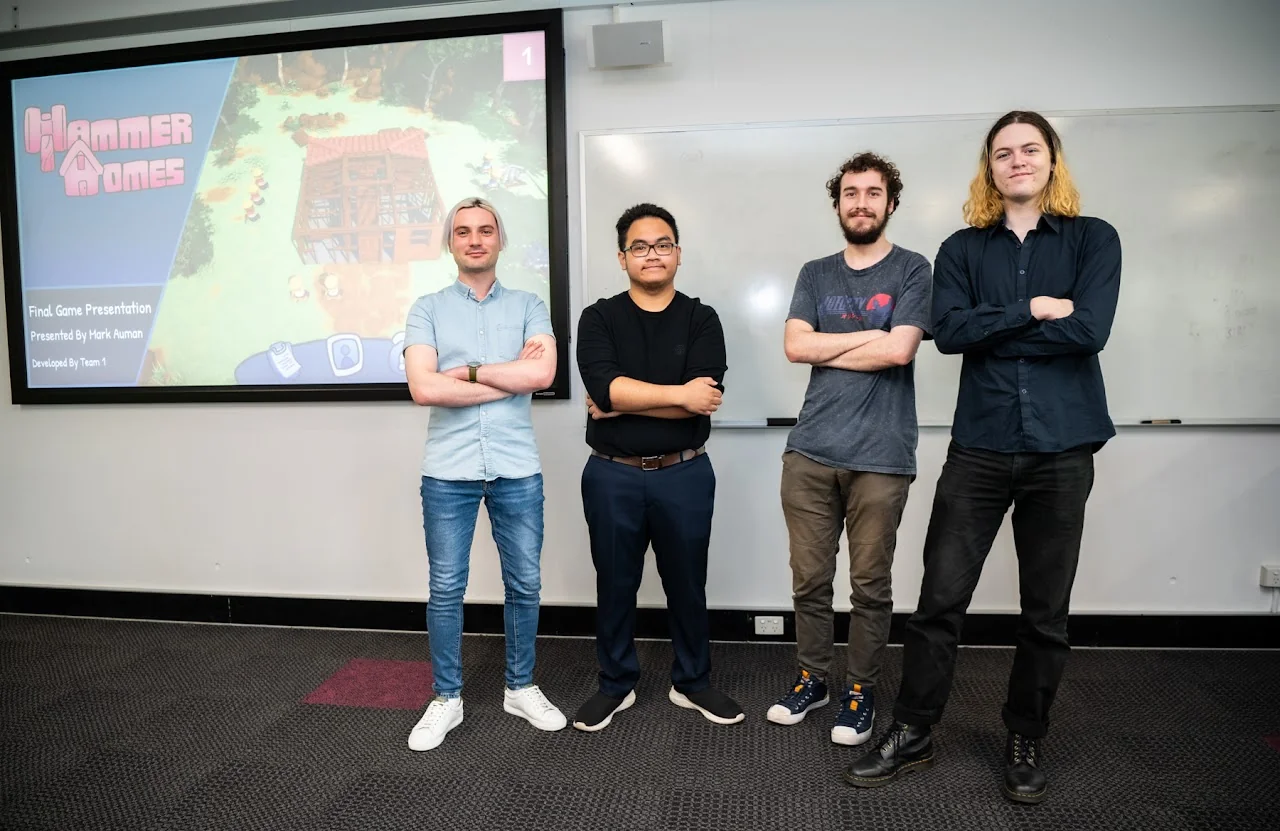
We presented the final game at the end of semester to the IGB200 teaching team, as well as representatives from AWIC, who were very happy with the final result. The game was released in November of 2022 on PC, both as a standalone build and playable in-browser.
Mobile Port Development
After the semester concluded, AWIC asked if the team would be interested in porting the game to iOS and Android. I worked on the mobile version from January to April of 2023 alongside one other team member, Mars Bleach, as a paid independent contractor - Mars handled the touch controls while I reworked the UI to fit mobile screen sizes and aspect ratios.

The Unity Device Simulator was invaluable here, letting me test UI layouts across many device resolutions without needing to own each physical device. While the mobile version was ultimately not published publicly, the engagement closely mirrored professional game development practice and gave me direct experience delivering client work under contract.
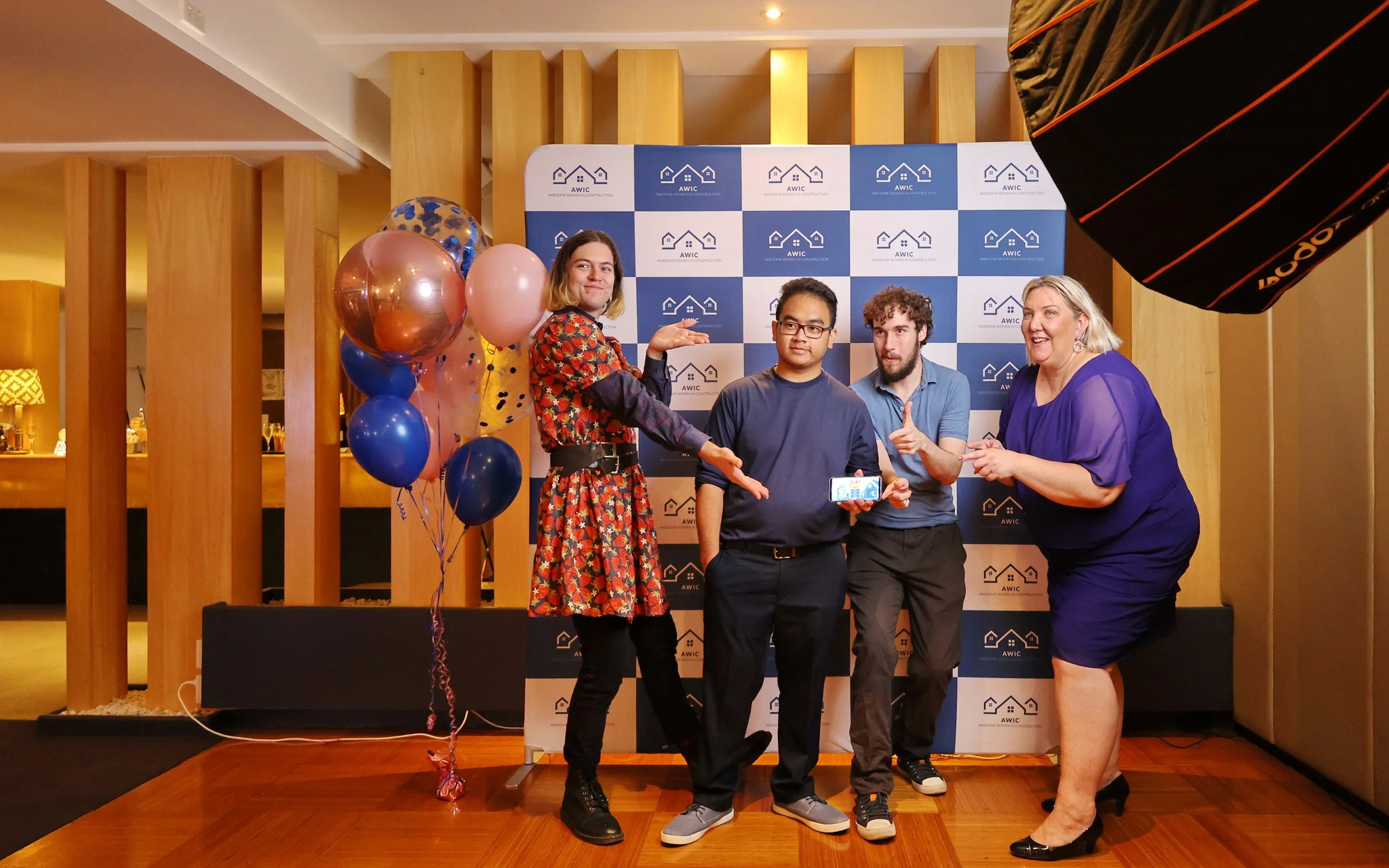
We completed development of the mobile port in April of 2023, with the game being released onto the App Store and Play Store by AWIC the following months. Overall, this project was a great opportunity, as it gave me my first taste at client development work in the real world.