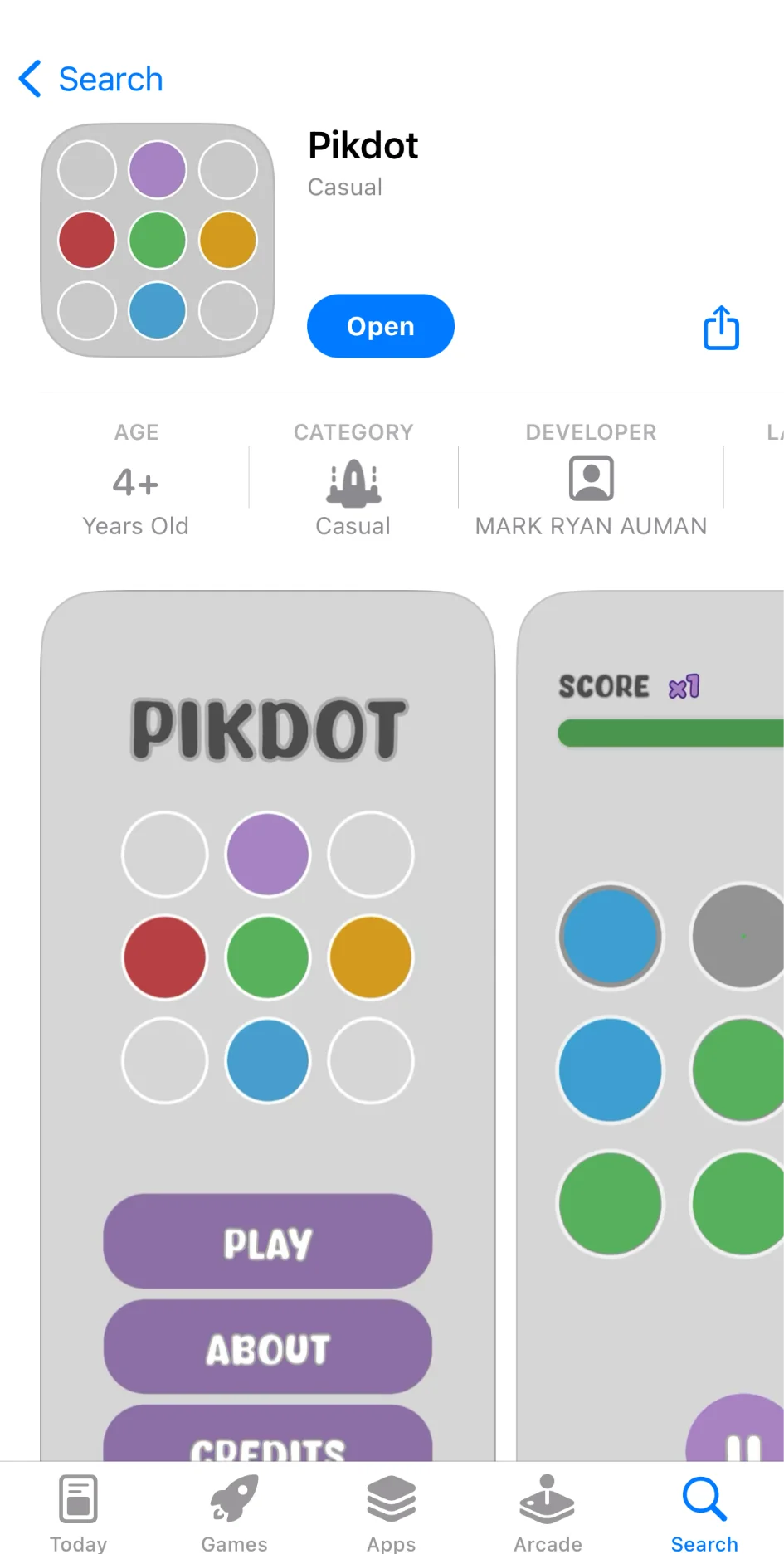
About the Game
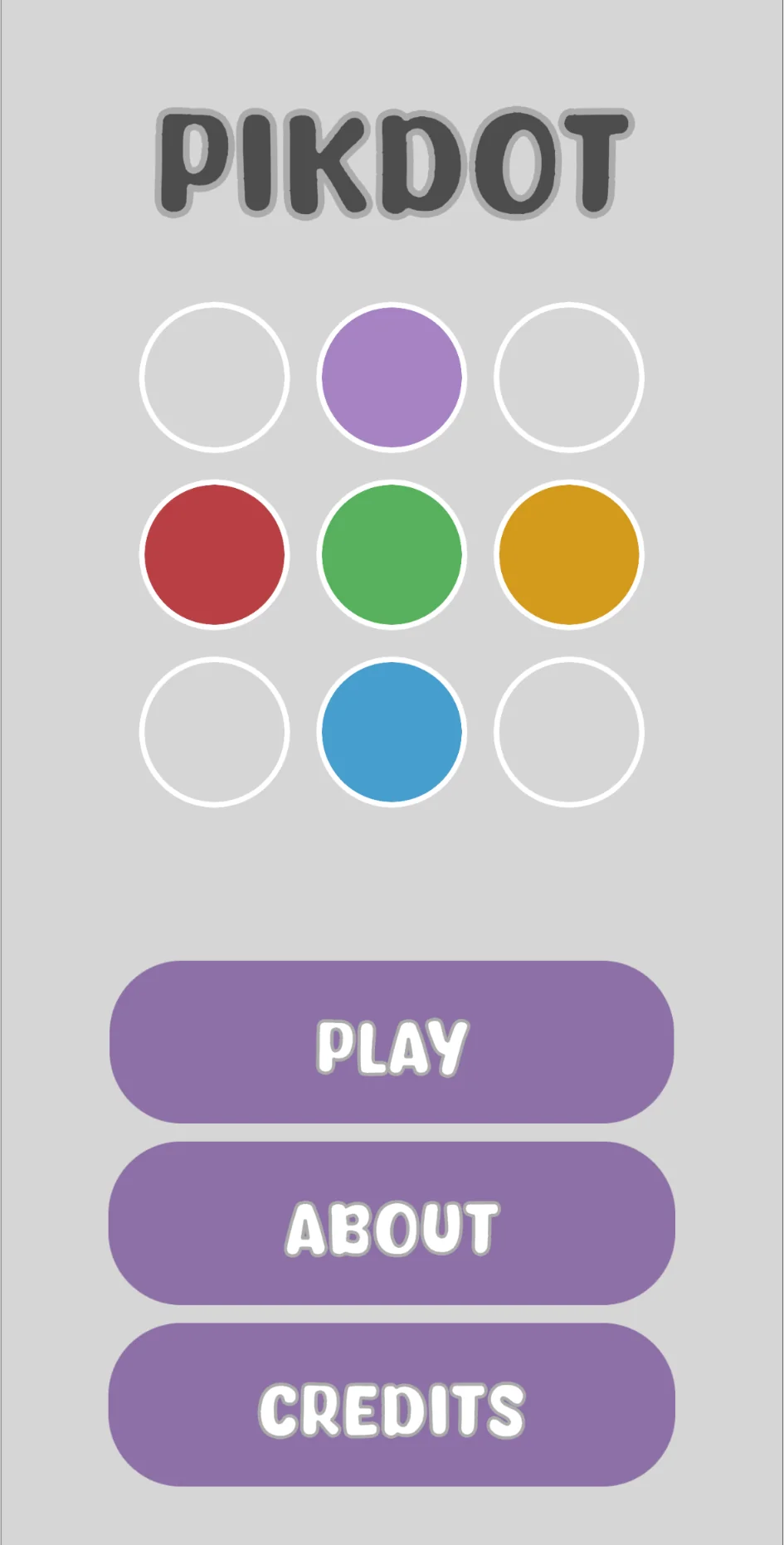
Pikdot is a casual mobile game built around a simple but addictive premise: tap the dots, score points, survive. Beneath the minimalist surface is a layered scoring system where different dot colours do different things - players need to understand and react to each type to achieve high scores.
Dot Types
Standard point dot - tap to score.
Score multiplier - increases your point multiplier.
Score points and activate adjacent dots.
Resets multiplier - no points. Avoid or manage carefully.
Deducts points - do not tap.
My Process
Early Concept Work
Pikdot was developed throughout January and February 2024. Having gained mobile development experience on AWIC: Breaking Ground, I hadn't been involved in that app's distribution and release - so the primary goal of Pikdot was to learn the full pipeline: design, prototype, develop, and ship to a real app store. With roughly a month available, I wanted a concept built around simple, immediate interactions.
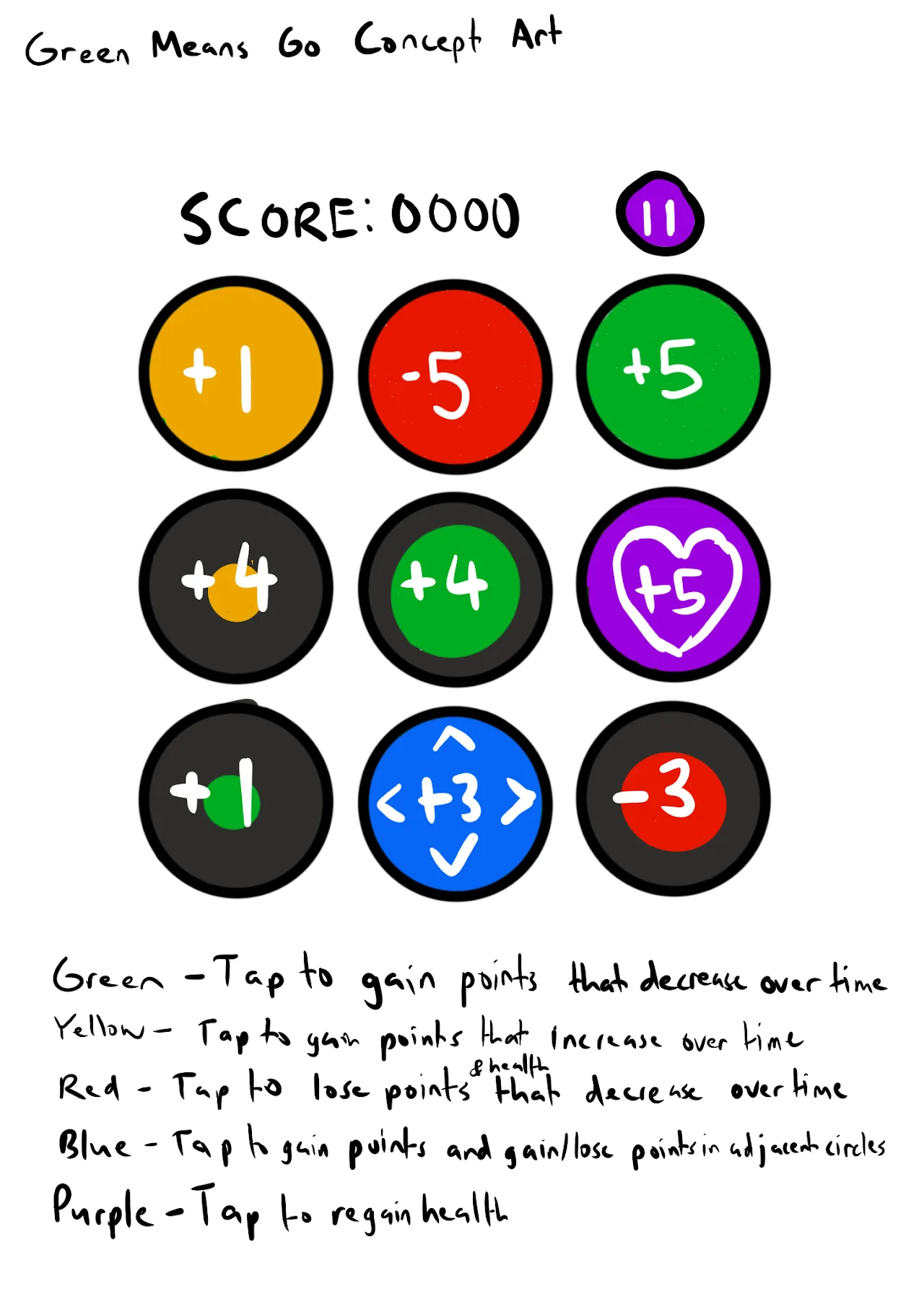
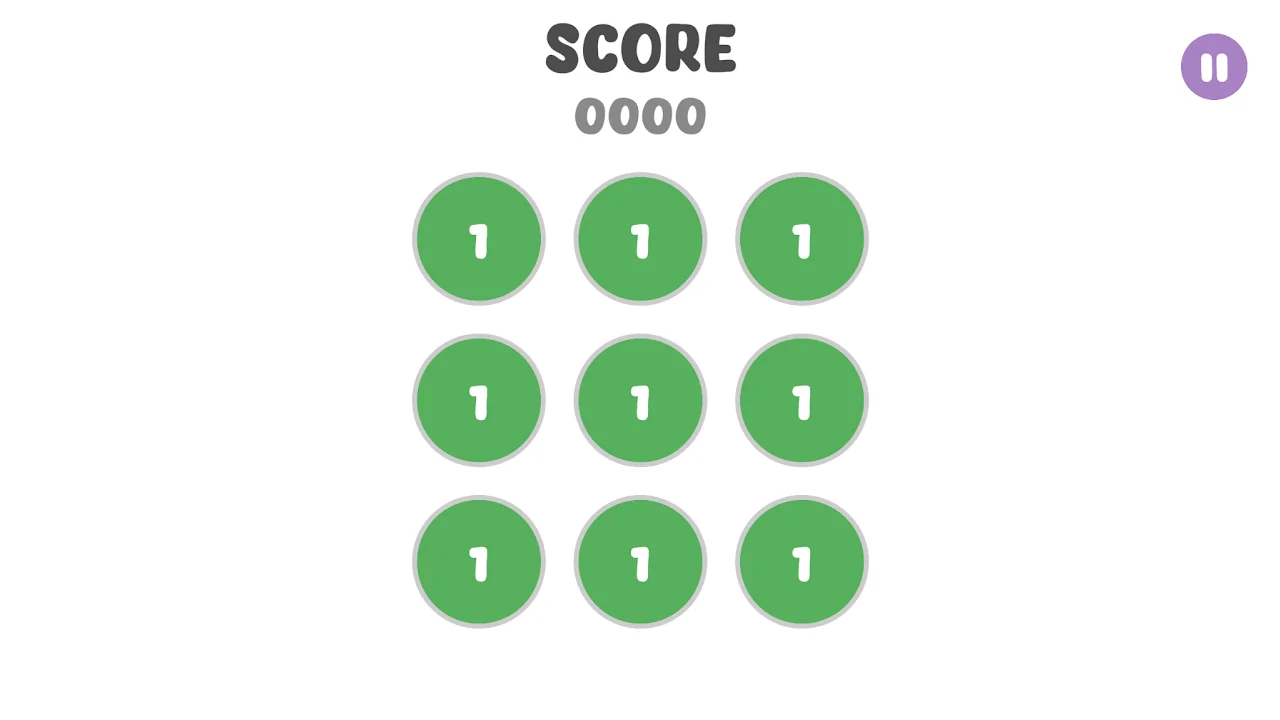
My initial design had circles appear on screen with numbers on them - nine colour types with various scoring rules. Green and yellow circles gained points, red deducted them, blue scored points and activated adjacent circles, and purple restored health. Circles would disappear when their value maxed or reached zero.
Early Prototype Work
I prototyped the concept in Unity for PC first. Testing quickly revealed problems with the numbers: the experience felt complicated, and players simply waited for red circles to disappear rather than engaging with them - meaning they rarely lost points or health, and rarely lost the game at all. There was no viable lose condition.
Prototype Refinement Work
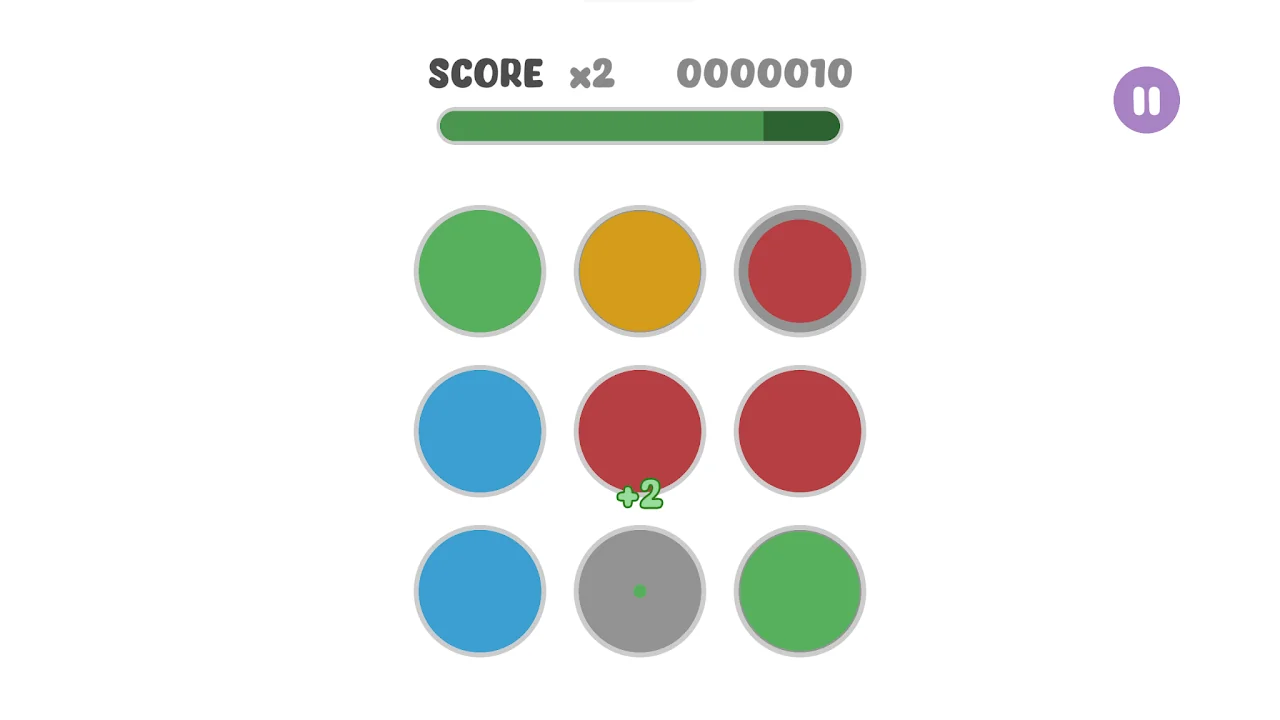
I reworked the design substantially. Numbers were removed entirely and the rules were simplified: green scores one point, yellow scores nothing, red deducts one point, blue scores a point and activates adjacent dots, and purple acts as a score multiplier that resets on yellow or red. A health bar was added that depletes over time - tapping green or blue restores health, while tapping red depletes it further.
Without numbers, players tapped much faster and became more prone to mistakes. That speed and the constant health pressure created a genuine loss condition and a far more engaging core loop.
Porting to Mobile
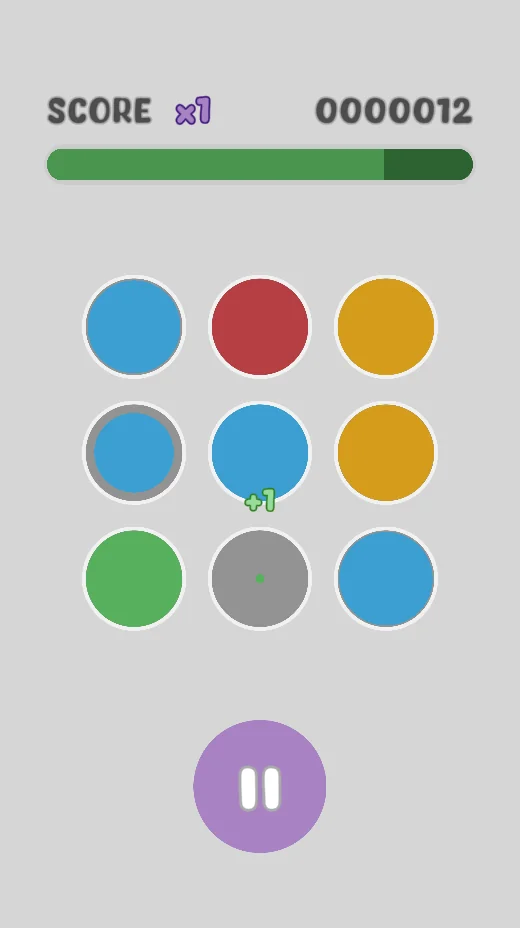
After testing confirmed the reworks worked well, I adapted the game to different mobile screen resolutions. The process was relatively smooth - prior experience on AWIC gave me a foundation to work from, and Pikdot's minimal on-screen elements made layout adaptation straightforward.
Publishing Pikdot
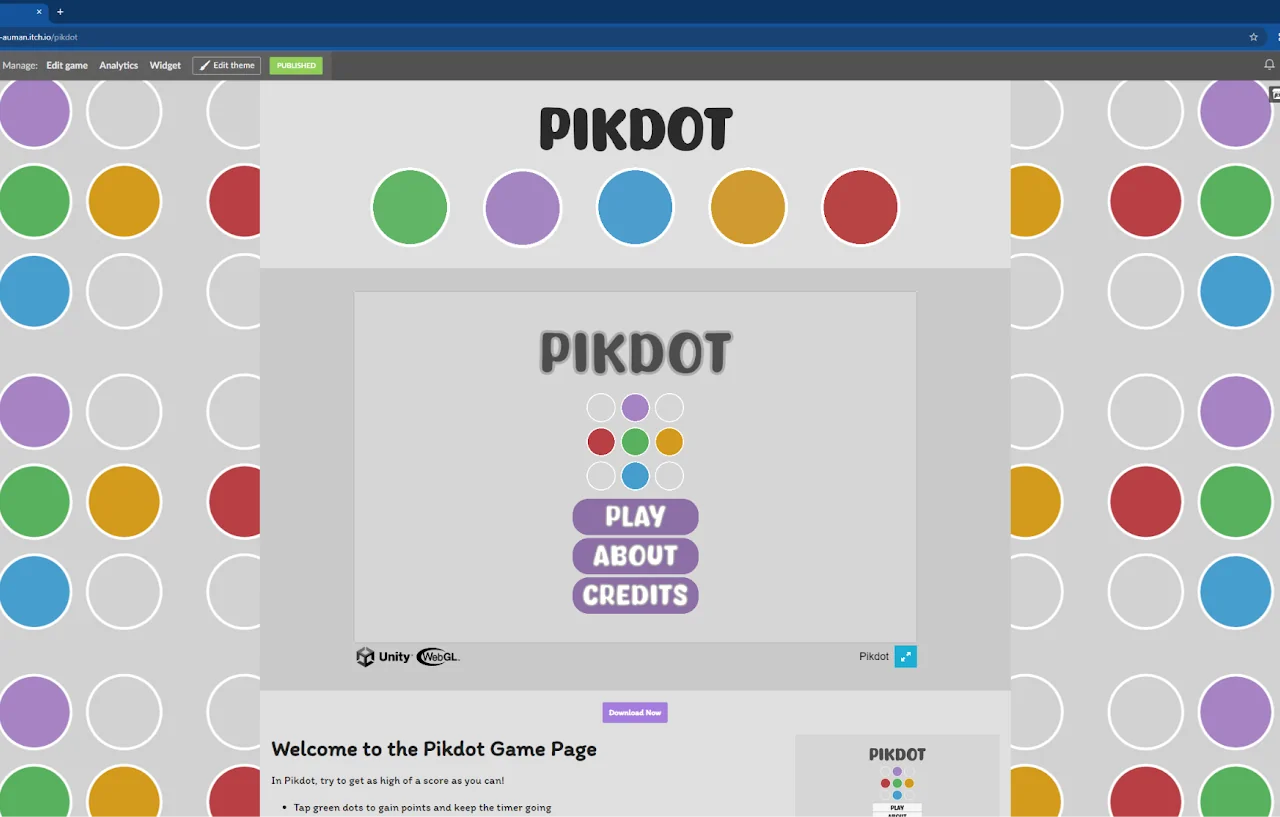
Following playtesting and refinement, I released Pikdot on the Apple App Store for iOS and on itch.io for browser and Windows. The App Store submission required creating and validating a build through Xcode on a Mac and providing a privacy policy. The most time-consuming part was enrolling in the Apple Developer Program - a lengthy process, but straightforward once through it.
I also prepared an Android build for the Google Play Store. Google requires a closed production playtest with at least 20 users over a two-week period before permitting a public release. I couldn't secure enough playtesters before returning to university for my final year, so the Android release remains pending.